Advertisement

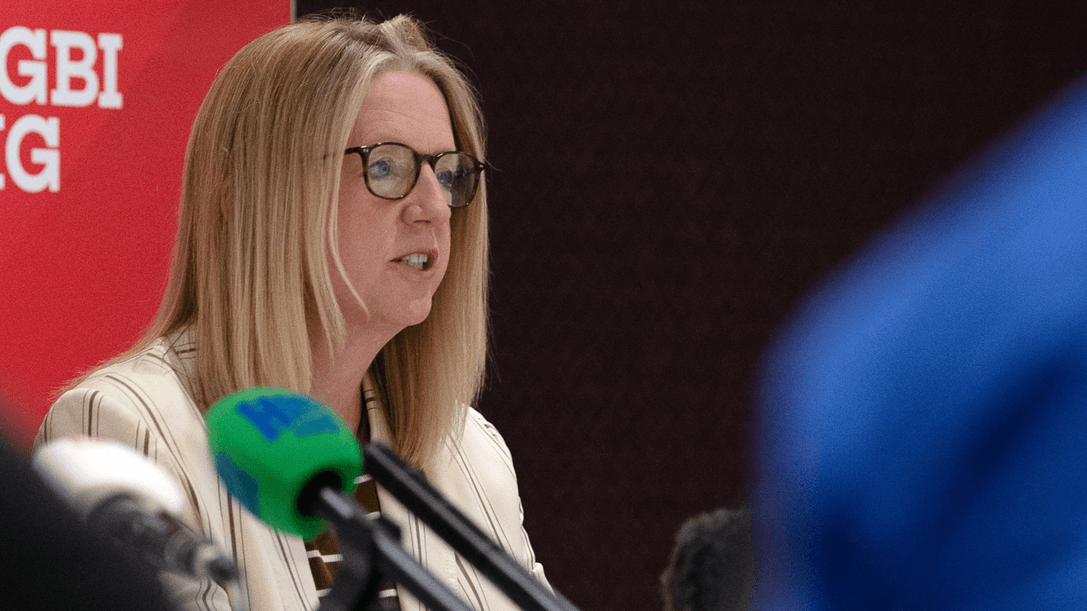
On Thursday morning, WRU independent chair Richard Collier-Keywood faced a public grilling from the Welsh parliament. It proved far more testing than the similar Westminster session prior to the Six Nations, from which the WRU escaped mostly unscathed. Far from providing greater clarity and reassurance to the Welsh rugby public, Collier-Keywood’s answers only served to plunge an already confused and disenfranchised community into an even deeper state of chaos.
Amongst the explosive and confusing ramblings that spilled from the independent chair’s mouth were suggestions that the surviving West Wales teams would be required to play home matches across multiple venues, that the process for awarding the East and West licenses will be different and admitting there was a ‘scramble’ to ensure their preferred buyer for Cardiff – Y11 – were allowed to own 2 clubs simultaneously. He also insisted that Y11’s purchase of Cardiff did not necessarily mean their other club, the Ospreys, would be killed off.
It is important to understand the wider context in which Collier-Keywood was answering these questions. He is currently facing a vote of no confidence at an emergency general meeting (EGM). That EGM, called for by Glamorgan Rugby Union, is tabling a series of motions and proposals including rolling back the reforms that were ushered in off the back of the sexism scandals in 2023. The motions are not linked, meaning Collier-Keywood can be ousted without the governance reforms being revoked.
The WRU is also currently the subject of legal action from 2 separate entities. The first is from the Scarlets, who are understood to have sent the union multiple pre-action letters over their handling of various negotiations. The second is from Swansea City Council (SCC), who are the most proactive group in attempting to thwart the WRU’s proposed professional rugby reforms.
SCC claim the the WRU, Y11 and the Ospreys senior leadership have already told them that they see no future for men’s professional rugby in Swansea and the Ospreys are to be cut from the URC. This is in direct contrast to Collier-Keywood’s statements to the Welsh Parliament today and the WRU have already stated that SCC’s version of events is inaccurate.
SCC have not only served the WRU with a pre-action letter but have also asked for a high court injunction to be brought in to prevent Y11 from purchasing Cardiff and for a watchdog to investigate the legitimacy of the proposed deal. They argue that there was a significant conflict of interest when the WRU chose Y11 as the Cardiff buyer and that closing down the Ospreys in this manner would be against competition law.
It is by considering this last point that we better understand Collier-Keywood’s answers on Thursday. Multiple times he referred to the WRU acting in accordance with competition law and made a point of insisting the process for awarding the West Wales license was not yet decided. Thus, the public statements regarding the future of the Ospreys from the WRU and SCC are in direct opposition.
Furthermore, the WRU confirmed that they had intended to attend a SCC hearing on the future of the Ospreys, but the council asked them not to come. If so, the council could be accused of hypocrisy, as one of their main criticisms of the union is their lack of transparency and communication. Meanwhile, Ospreys Supporters club have also confirmed they have been granted a meeting with WRU CEO Abi Tierney, but there will be strict limitations on what information they can share with fans afterwards.
Later on Thursday evening, the WRU released a staged interview with Tierney as a podcast where, as well as doubling down on the claim that no decision on which region would be cut had been made, she spoke about the personal toll the process had taken on her. She spoke of not feeling safe in her work and reference AI images generated on social media depicting her as a nazi.
On Friday, Ospreys head coach Mark Jones told a press conference Y11 were ‘fighting hard’ and predicted ‘more twists’ in the ongoing saga. However, Swansea Council leader Rob Stewart said the WRU’s story was changing between private meetings and public ones. He repeated his claim that he had been told in a meeting, attended by Tierney, that the Ospreys will cease to exist at the end of the 2026/27 season.
SCC have also, in all their statements, stated that their ultimate aim is to halt the WRU’s proposed reforms and to safeguard professional men’s rugby in Swansea. This may also be why Collier-Keywood twice referred to his desire for the West Wales region to hold games across the region, rather than in one set location such as Parc Y Scarlets in Llanelli. By today’s regional boundaries, that would span an area from Bridgend (30 minutes from Cardiff) to the West Wales coast.
There was a sense that Collier-Keywood was on the back foot during the Welsh Parliament grilling and that the answers he gave may not have been pre-planned. Alison Thorne, who accompanied Collier-Keywood, twice had to insist that her colleague was referring to hypotheticals and that no discussion on the points he was raising had actually taken place.
The fact that a parliament hearing was the first time the Welsh public had heard several of the details he revealed only speaks to the shocking lack of information and communication that has dogged the WRU reforms ever since the process started back in June last year.
Fundamentally, though, it is clear is that the WRU do not yet know what their end goal looks like or how they will get there. They confirmed in the hearing that the URC have still not agreed to allow the Welsh contingent in the league to drop to 3 and there is no replacement club lined up to fill the void. Even if they did have that agreement, they have still not arrived at the process whereby the 3 regional licenses will be awarded.
Can the WRU be stopped? To answer that, let us consider the current campaigns against them. If the EGM is successful in removing Collier-Keywood, the WRU board will elect a new interim chair. The board have reemphasised several times that they are unanimous in their agreement a region must be cut. So, logically, the new chair will maintain that stance.
If SCC were to succeed in their mission – which is to halt the WRU reforms, prevent Y11 from buying Cardiff and safeguard professional men’s rugby in Swansea – it would be unprecedented achievement in sports governance, yet merely hold Welsh rugby in the situation it is in today: a complete stalemate.
Meanwhile, the WRU continue to unveil appointments to their leadership team. Former head of analysis under Warren Gatland has joined as technical director; he will be responsible for creating a Welsh rugby ‘DNA’ and have a major input on all coaching appointments in Wales. Naturally, in the days before his appointment, the WRU announced they had hired a new coach. This one was a new defence coach to work under Steve Tandy.
Both rolls are ones you would have though should have been filled some time ago. In fact, it is remarkable that the WRU have gone this long without those people in place and it raises serious questions about the decision-making processes for the preceding appointments.
Did they think Dave Reddin would not need extra help in developing the Welsh Rugby performance plan? Did they think Steve Tandy, a defence expert, would not need a specialist assistant coach? As one Welsh Rugby podcaster recently put it: just another day at the circus.