Advertisement

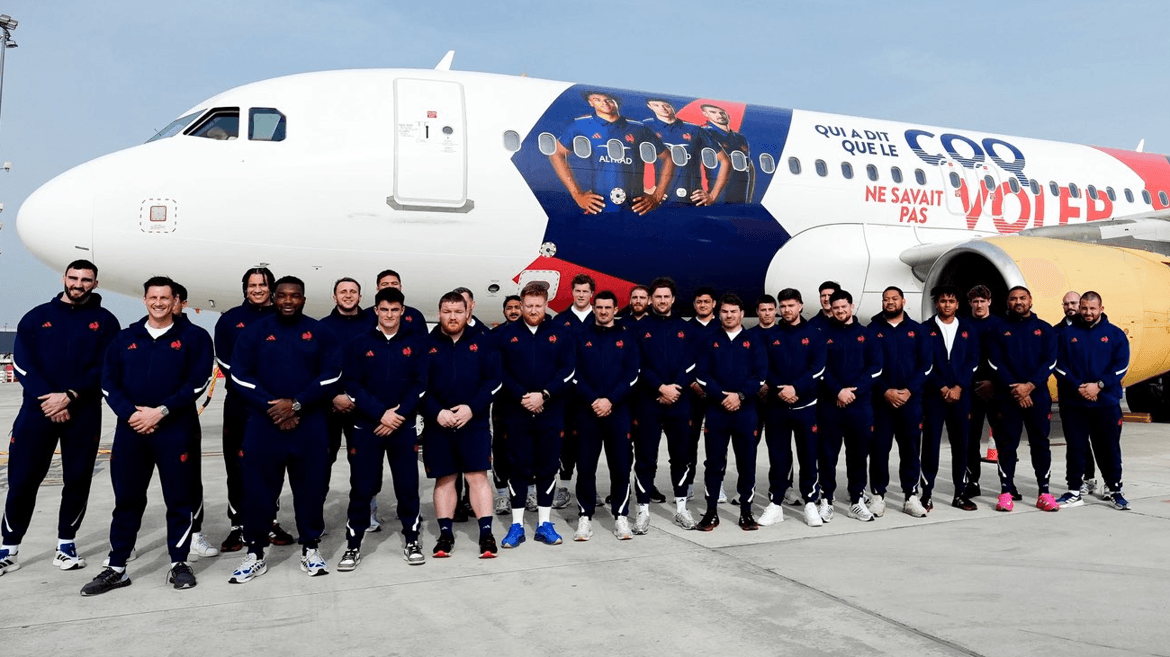
It is typical of those who find themselves in luxurious positions to complain about things. The wealth and riches at their disposal mean they develop a sense of entitlement, and when they have all basic needs covered, they turn their focus to expressing their dissatisfaction with more trivial issues. It is this position which France’s Head Coach Fabien Galthié finds himself in.
Of the men in charge of each team in this Six Nations, Galthié is the only one to have overseen three victories (all with bonus points), and thus the only one whose team’s performances have not come under scrutiny. He’s blessed to be able to bring back a midfield that steered Union Bordeaux-Bègles to a Champions Cup title. He can afford to drop the Player of the Match from the previous game because he can replace him with the Player of the Match from the opening game. He is sufficiently endowed with resources that he can eye up the opposition and tweak his selection to counter their strengths, without seemingly reducing the quality of his own team in any way at all.
Naturally then, with all this wealth and luxury, when he announced his team to face Scotland at Murrayfield on Thursday, Galthié found himself complaining. Was he complaining? Was it pre-match mind games to bait the Scots? Or was he just trying to issue a public warning to his team and the French rugby public to set out that they won’t have it easy away in Edinburgh? Either way, his comments about the size of the away dressing rooms at Murrayfield, referring to them as the smallest in world rugby and saying that his team have to change in the corridor, have certainly caused a stir. Regardless of how you interpret his comments, one thing is clear: he knows that France can’t just turn up and expect to have things all their own way. Away games in the Six Nations are always tough.
The headline change in the French backline is the return of the Union Bordeaux-Bègles midfield partnership of Nicolas Depoortère and Yoram Moefana. Galthié seems to know his first choice centre pairing, and this is it. It feels like a sensible decision against a Scotland midfield duo that have been one of the world’s best in recent years. While the Pau youngsters Fabien Brau-Boirie and Émilien Gailleton impressed in their outings against Wales and Italy, this pairing brings a level of robustness that will be particularly valuable against Scotland.
Depoortère increasingly looks like France’s premier option at outside centre: he has pace, power and composure on both sides of the ball, and - crucially, given the evolution away from Gaël Fickou - is quickly developing into a defensive leader
Alongside him, Moefana offers a different but equally important skillset. One of the standout performers of last year’s Championship, his ability to do the hard yards around the ruck area is invaluable. With France opting for a high-work-rate back row rather than one built purely for carrying power, Moefana’s physical presence in tight exchanges becomes even more important. He also provides an additional jackal threat, another thing that France’s pack arguably lacks, and something France will need to slow down Scotland’s attack.
In reserve, in the no.23 jersey, Pierre-Louis Barassi is retained ahead of the Pau starters from the previous games. Brau-Boirie suffered a dislocated finger against Italy and therefore will not be risked, and Barassi represents a more robust option than Émilien Gailleton. Barassi seems to be a favourite of the French coaching staff, and it makes sense against Scotland’s backline to opt for the more powerful option.
Neutrals will be rejoicing at the return of Matthieu Jalibert, after his late withdrawal ahead of the Italy game. Not only will he bring his own brand of thrilling attacking rugby, but it also means France revert to a three-playmaker structure, with Jalibert operating in tandem with Thomas Ramos and Antoine Dupont.
Thomas Ramos earned his 50th cap in Lille, and his performance against Italy was one of the least convincing of his half-century. He was unusually erratic, giving interception passes, kicking out on the full and having a total brain fade that led to Italy’s try. It may be partially explained by not having trained much at fly-half in the build up, but either way, the reintroduction of Jalibert gives France an additional decision-maker in the backline and another genuine attacking threat.
Jalibert has been heavily involved throughout the tournament, posting a remarkably high number of carries for a fly-half. His willingness to take the ball to the line creates space for those outside him, while his distribution allows France to stretch defensive systems in multiple directions. When you have another player, in Ramos, that can also do that, you see the wonderful attacking rugby we saw in the first two rounds.
It also allows Théo Attissogbe to shift back to the wing. His performance against Italy was, from a very high base, his least impressive outing for France. Moving him back to the wing restores a key element of France’s kicking strategy: Attissogbe is both a strong aerial defender and an exceptional chaser. For all the talk of sparkling backlines, the contestable kicking battle, so critical in the tournament so far, will be where this game is won and lost. We could see a lot of kicking in this game, but this is a positive thing: it should lead to some thrilling, instinctive counter attacking rugby.
Critical to France’s kicking strategy, of course, has been Antoine Dupont. It feels like we’ve seen less of the virtuoso showreel moments from Dupont, but he has been among the tournament leaders for both carries and kicks so far. The way France are able to alternate between their three key men is what makes them so good in attack, but has also helped them win the territorial battle. The 34 points conceded by France in the first three rounds is the lowest they’ve ever conceded in the first three rounds of a Six Nations.
The most surprising selection decision may be in the second row. Emmanuel Meafou was Player of the Match against Italy, yet Fabien Galthié has not hesitated to leave him out. It means that, remarkably, France have now twice dropped winners of Player of the Match, after Mickaël Guillard was dropped two weeks after his standout performance against Ireland.
Guillard returns in place of Meafou, and France’s starting XV is the same one that took the field on the opening night against Ireland. While this might look like France have set first-choice XV, in truth, it appears to be a classic case of “horses for courses”.
Against Italy, France prioritised raw power and bulk. Against Scotland, mobility and work-rate may be the greater priority. Guillard offers dynamism as a ball-carrier and greater range around the field, attributes that could prove important if the game becomes as open as many Scotland fixtures do.
Charles Ollivon also returns and though Thibaud Flament is no slouch around the park, Ollivon’s presence clearly also contributes to that mobility. Despite the significant long-term injuries that have punctuated his career, he still possesses exceptional pace for a back-row forward — let alone someone operating in the second row.
The selection also places further focus on France’s back-row balance. Galthié’s approach in the tournament so far has clearly opted for relentless work-rate over specialist carrying power, which has worked. It has complemented France’s kicking strategy and also helped them suffocate oppositions in defence. There were rumours that Anthony Jelonch might drop to the bench (as he was struggling with a niggle) with Lenni Nouchi coming in. The fact that Jelonch retains his starting place suggests the coaching staff remain convinced by this trio’s ability to outwork opponents.
With Flament, Meafou and Nouchi lying in reserve, France’s bench once again has terrifying power and aggression. It’s not hard to envisage a scenario where France take a ‘Bomb Squad’ type approach, where they unleash their bench and overpower Scotland in the final 20 minutes.
If there is one area where France’s riches do not extend quite so far, it is unquestionably at tighthead prop. France have conceded only 17 penalties across their three games so far, and five of those have come at scrum time against the various tighthead props.
Dorian Aldegheri looked off the pace in Lille, and Murrayfield is unlikely to offer him much respite. Scotland may not test him out like Italy and Wales did the scrum, but the return of Pierre Schoeman means he won’t get an easy ride and he will have his work cut out around the field and he could get properly exposed by Scotland’s tempo.
Injuries have complicated matters further. With both Régis Montagne and Georges-Henri Colombe unavailable, Galthié has little choice but to stick with Aldegheri in the starting role.
Behind him, the decision to select Demba Bamba ahead of Thomas Laclayat is a curious one. Laclayat has been one of the leading tightheads in the Top 14 this season since moving to Pau last summer. Ironically, it is the man brought in to replace him at Racing 92 that has pipped him here. Laclayat’s reduced turnaround time after Pau’s fixture against Bordeaux last Sunday evening may have been a factor, but it still feels like an unexpected call given Bamba was a late call up when Colombe withdrew with injury.
For Demba Bamba in particular, the selection represents an opportunity - and perhaps a last chance - to rediscover the promise that once made him one of French rugby’s brightest prospects. It is now seven years since he burst onto the Six Nations scene as a 20-year-old, fresh from helping France win the 2018 U20 World Championship alongside players such as Romain Ntamack, Pierre-Louis Barassi and Jean-Baptiste Gros.
Gros has established himself as a top level international prop, and now has 43 caps to his name. His contemporary Bamba has 29 caps, and still has plenty to do to prove himself at international level. While he has shown flashes of improvement this season, his last international appearance - the third Test against New Zealand last summer - saw him struggle badly at scrum time. He turns 28 a few days after the end of the Six Nations, so if he doesn’t fulfil that early promise now, you’d have to question whether he ever will. This feels like a pivotal moment in his international career.
The issues at tighthead for France offer a glimmer of hope for Scotland. In Finn Russell, they have a playmaker of their own who is as majestic as Jalibert. He’s a master of tactical kicking, and the contestable kicking battle will be key too, and with Kyle Steyn and Blair Kinghorn, that could be another area where Scotland can get the upper hand.
Ultimately though, the selections underline the position France find themselves in. Galthié has the luxury of making tactical adjustments without noticeably weakening his side, rotating combinations and profiles to suit the specific challenge ahead. His pointed comments in his press conference, not just about the Murrayfield dressing rooms, but also how complimentary he was about Scotland’s backline, suggest a coach keen to guard against complacency. For all the talent at France’s disposal, winning away in the Six Nations is rarely straightforward. France have the armoury to run out comfortable winners, and they may well do so in the final quarter, but this game is going to be anything but easy.