Advertisement

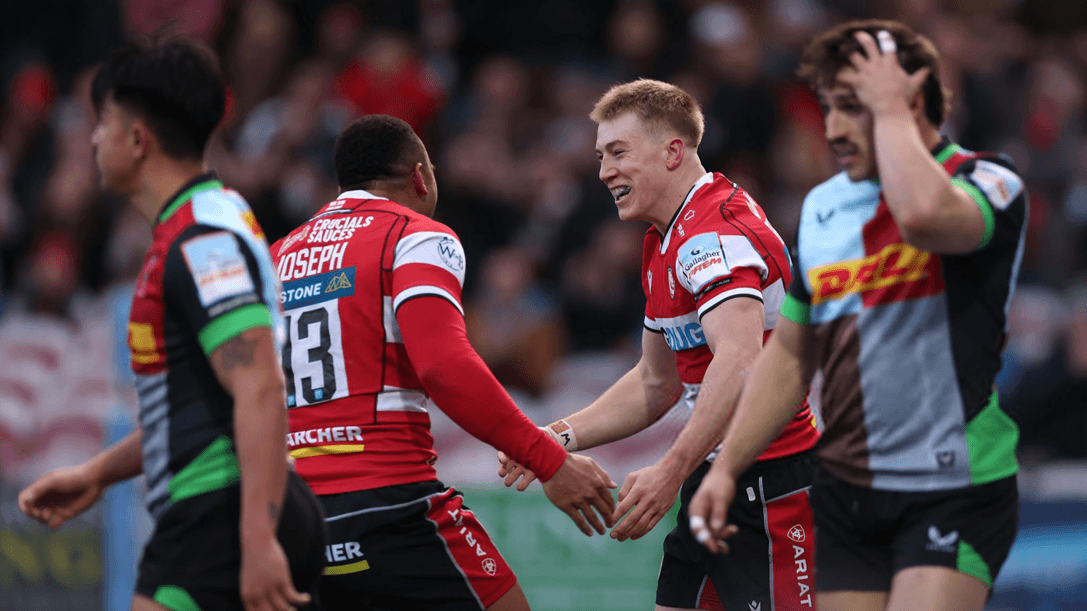


Redshaw (11', 59'), Ludlow (40'), Thorley (66')
Tries
Murley (9'), Dombrandt (23')
Byrne (12', 42', 60')
Conversions
Smith (24')
Penalties
Smith (64')
Gloucester finally have their first league win of the season — and they earned it by exposing just how far off Harlequins were in the fundamentals. The visitors led twice but unraveled under pressure, while Gloucester were direct, accurate and clinical in the moments that mattered. Ben Redshaw’s brace framed the narrative; Ollie Thorley and captain Lewis Ludlow supplied the heft and the heartbeat.
Chronologically, Quins actually struck first: on 10 minutes Cadan Murley finished after one of their few tidy sequences. Gloucester’s reply was immediate and pointed — at 12 minutes Redshaw hit back and Ross Byrne converted for 7–5. Instead of consolidating, Quins doubled down on looseness. On 24 minutes Alex Dombrandt powered over and Marcus Smith added the extras for 12–7, but that was as composed as the visitors looked.
From there the pattern flipped. Gloucester’s maul, kicking game and breakdown shape took hold; Quins spilled a high ball, then botched an exit, and the field tilted. Crucially, just before the interval Ludlow pounced after Rodrigo Isgró’s mistake — a misjudged take under pressure that coughed up broken field — and the skipper muscled over. Byrne’s conversion swung it and Gloucester turned around 14–12 ahead, a lead forged by composure and pressure rather than flash.
The second act underlined the gulf. Quins’ exits frayed, their lineout lost timing, and the penalty count turned the pitch into a treadmill. Redshaw’s second on 60 minutes arrived after repeat phases and crisp handling; Byrne added the two on 61 to open daylight at 21–12. Smith’s penalty on 65 kept a flicker alive, but Gloucester’s answer was ruthless: Thorley — on his 150th appearance — finished on the edge at 67 minutes to shut the door at 26–15. From there, the game management was exemplary: contestable kicks hung for chasers, touch-finders were brutal, and the defence stayed connected to smother Quins’ broken-field ambitions.
The headline is twofold. Gloucester finally banked their first win of the season because they won collisions, owned the air and looked organised around Byrne’s tempo and Ludlow’s leadership — exactly the platform they’d been missing. Harlequins, by contrast, were miles off: lateral attacks, soft edges, unforced errors and poor ruck security. Even in the 22 they lacked clarity; too many promising entries died on handling or isolation. Gloucester played Premiership rugby. Quins didn’t. Kingsholm got the reset it craved — and the manner of it mattered as much as the margin.