Advertisement



J. Osborne (2'), D. Sheehan (10'), R. Baloucoune (18'), D. Murray (55'), T. O'Brien (67', 79')
Tries
D. Graham (6'), F. Russell (51'), R. Darge (60')
J. Crowley (3', 10', 56', 68', 79')
Conversions
F. Russell (7', 52', 61')
J. Crowley (72')
Penalties
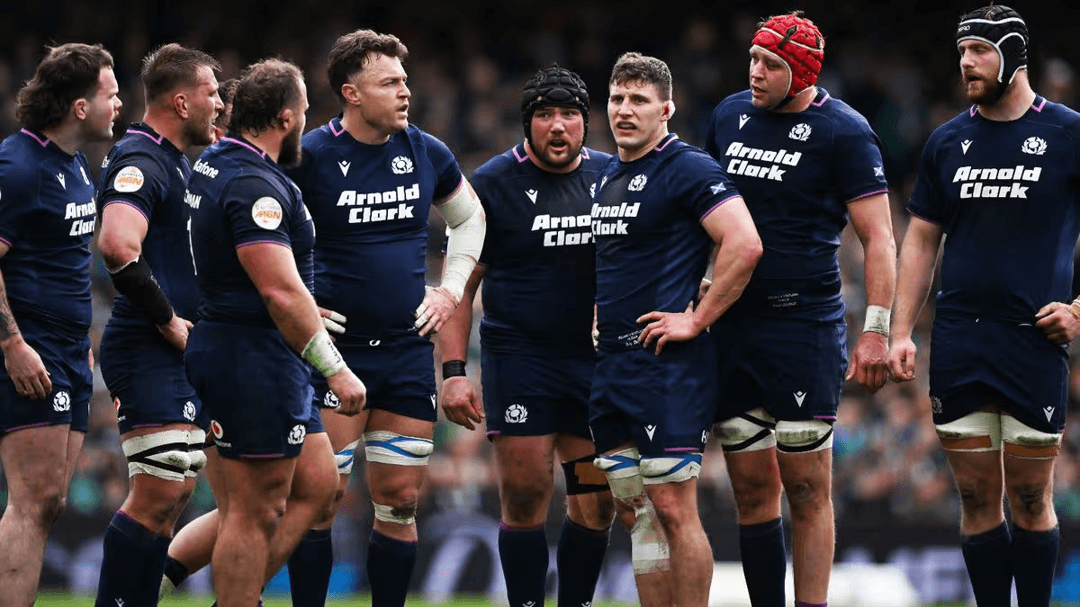
Scotland were unable to end a memorable Guinness Men’s Six Nations campaign with a win that would have given them a chance of winning the Championship.
Instead, Gregor Townsend’s side lost 43-21 to Ireland in Dublin, a result that gave Andy Farrell’s team the Triple Crown and a hope that England could beat France to give them the Championship.
Darcy Graham, Finn Russell and Rory Darge scored Scotland’s tries, but they were unable to find the flowing rhythm that earned them wins over England, Wales and France. It means Scotland’s wait for a win over Ireland is up to 12 matches and means Townsend has yet to taste victory over his fellow Celts.
Here’s how ATR saw the match…
Breakdown Blues
Against France, Scotland had been more or less perfect in everything they did. The most obvious facet was at the breakdown where they won 125 rucks from 125. It meant they had plentiful quick, front foot ball to play with, and they made use of it with phenomenal ball handling.
A week later, they lost four of their 103 rucks, which represented a 20 percent drop in their favoured source of ball. Furthermore, Ireland were able to slow their ball down, with Tadgh Beirne a particular pest and leading the way in turnovers won.
Scotland really missed Jamie Ritchie, who was injured against England in Round 2. Jack Dempsey and Matt Fagerson are both carrying back rowers, Rory Darge is the forager, whereas Ritchie is the type who gets down and dirty, and is happy to do the work to stop the opposition messing up their breakdown.
Box Kicks
Scottish scrum halves don’t kick that much, or so it seems. When they do it is to keep the momentum in their favour or to clear their lines. As such, on Saturday, it was surprising to see Ben White launch the slow type, the type with caterpillar trails, that the ref has to chivvy along, the type that says we’ve run out of ideas and the balls is slow, so you have a go.
It was a further sign of what a good job Ireland were doing in shutting down Scotland’s options left, right and centre.
White kicked 10 times against Ireland, whereas a week earlier he had kicked 12 times in a winning cause, the most kicks by any player that day. In Dublin, Ireland scrumhalf Jamison Gibson-Park kicked 14 times, but unlike White or George Horne who replaced him on the hour, his came when he was on the front foot, and done to continue his side’s forward momentum.
Rusty Russell
Finn Russell is unlikely to want to look back on this game. You can’t imagine him pouring over it, though in fairness you can’t really picture him worrying about any match that is in his past.
The Scottish flyhalf had a good match, as his try and three conversions attest, and he didn’t stop trying to inspire an comeback, no matter how unlikely it became as the afternoon wore on.
However, there were definite signs that Ireland’s defence was able to get to him. At 14-7, and in a good position to attack, he looked up, saw there was no-one available and instead crabbed sideways before Ireland’s defence snaffled him. Then on the hour, just inside his half, he feinted to kick down Ireland’s unguarded left, changed his mind, found there was no pass on, and before he knew it Ireland’s defence was on him again.
Earlier in the tournament, Tom Jordan started at fullback before Blair Kinghorn reclaimed his shirt for the Wales match. It is a warning to Townsend that they can’t always rely on Russell, and that sometimes it would be wise to have a second playmaker available.
Bonus Breather
Much was made of Ireland having one day more than Scotland to recover after their Round 4 exertions. While it would have been of some influence, what it showed was the residual benefit of Ireland being able to choose from four elite teams, while Scotland can only choose from two, backed up by players in England and France.
In short, Ireland’s depths of playing resources is higher and when they get it right against Scotland, then there should be no expectation other than an Irish victory.
Still, Scotland did well to stay in the fight by the hour mark with the score 26-21. Then came another error from a restart and after seven minutes effort Ireland stretched the lead to 33-21. It was another example of errors compounding errors.
One came in the build-up to Robert Baloucoune’s try. In defence, Kinghorn charged up and in at Stuart McCloskey, but got his timing wrong. It left the covering Darcy Graham too much to do, and he did well to reach Baloucoune.
Huw Jones was responsible for one of the restart errors and he also failed to find his man with a pass as Scotland enjoyed one last attack of the first half. Late on as they chased a four-try bonus point, captain Sione Tuipulotu knocked on. It was just his luck that it fell to McCloskey who sent Tommy O’Brien away for his second try.
It spoke volumes of Scotland’s travails at the Aviva Stadium.


