Advertisement


All eyes may be on Les Bleus’ thrilling Men’s Six Nations campaign, but behind the scenes in France, a storm is brewing over that most emotive of topics: the salary cap. Just as the TOP 14 have ushered in radical changes to the cap itself, that are set to have a huge impact on the rugby transfer market, a story has broken that prompted accusations of cheating, a lawsuit for defamation, and the integrity of rugby’s biggest star, Antoine Dupont, being called into question.
In this article, we will break down how the French salary cap works, what has changed and why Dupont has been left furious at accusations made by one of France’s biggest newspapers.
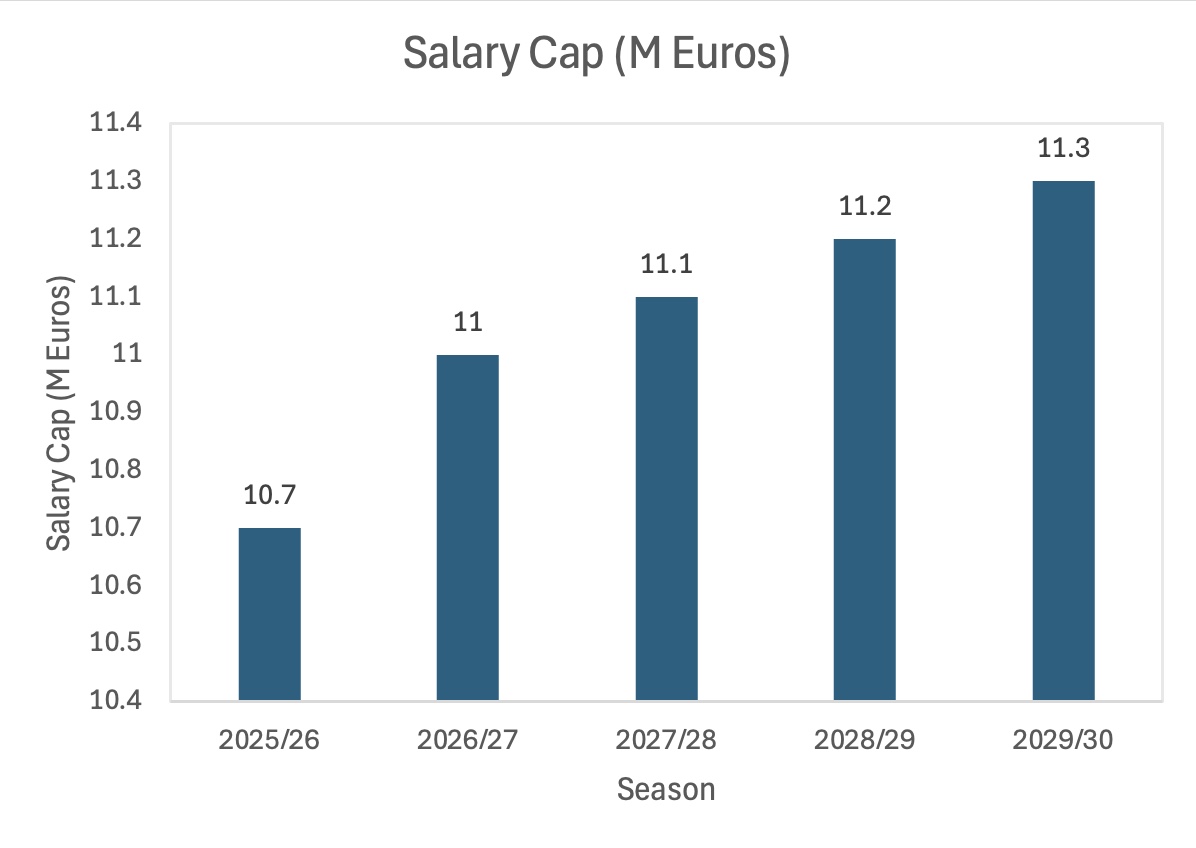
Before we get into the accusations and lawsuits, first we must understand how the TOP 14 regulations have changed and what the ramifications of those changes are. Previously, the cap had been set at 10.7 million euros per season - already the highest in Europe. From next season, the cap will rise to 11 million euros and then rise by a further 100,000 euros every season until 2029/30, when it will be locked in at 11.3 million euros.
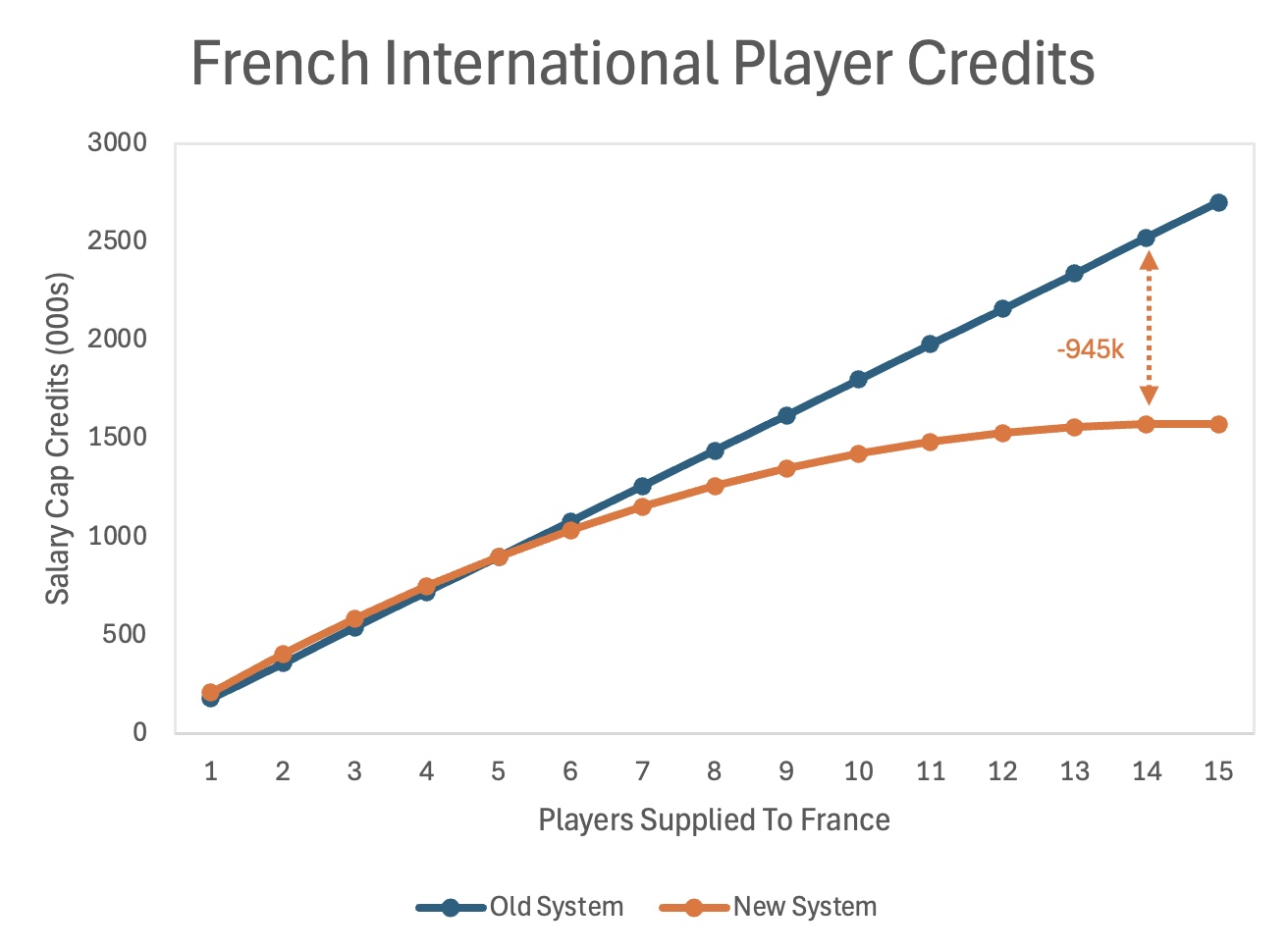
 However, thanks to a change in how salary cap credits work, league champions Toulouse may actually have less to spend than they previously had. The old credit system meant that for every player a club provided to the French national team elite squad, they were allowed to spend 180,000 euros above the cap. For instance, if a club supplier 10 players, their effective salary cap was raised by 1.8 million euros. Toulouse were the biggest beneficiary of this, thanks to supplying by far the most players to Fabian Galthie’s squad; the initial 2026 Men’s Six Nations squad had 14 Toulouse players, twice as many as the next best club.
This system has now changed. Moving forward, the first player a club supplies will earn a credit of 210,000 euros and then, for each subsequent player, the additional credit reduces by 15,000 euros. What this means is that the credits for international players now have a hard cap of 1.575 million.
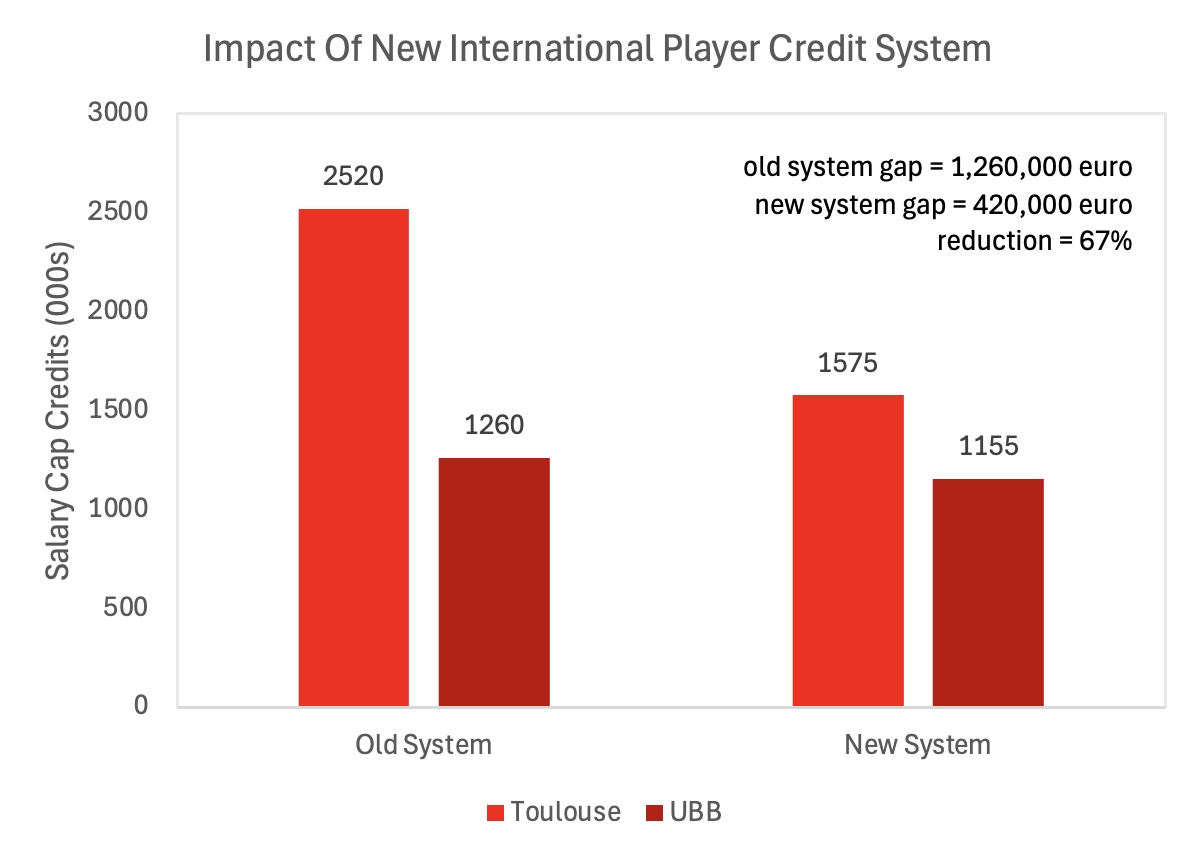
 The new system is thought to have been heavily contested around the negotiating table by the clubs. Reports suggest the changes were championed by Union Bordeaux-Begles’ president Laurent Marti but vehemently opposed by Toulouse’s president Didier Lacroix. When you lay out the impact of the changes, it’s not difficult to see why.
Toulouse are currently supplying 14 players to the French national team and UBB are supplying 7. If we stick with those numbers as an example, Toulouse’s theoretical spending advantage over UBB, thanks to international credits, is reduced by nearly 70%. These numbers are just theoretical, but however you measure it, Toulouse are worse off under the new system.
 It isn’t difficult to imagine why the TOP 14 would want to clip Toulouse’s wings. They have won 5 of the last 6 titles and are runaway leaders in the league this season. Changes to the salary cap have been on the cards for some time in France and no one was surprised when these changes were announced.
The good news for Toulouse is that they don’t have to slash their budget overnight; there is a safeguard of how much a team’s credits can drop per season, set at 300,000 euros. However, the LNR financial report for the 2023/24 season revealed Toulouse’s player wage bill was 13.4 million euros. Under the new limit, that bill can be no higher than 12.875 million come 2030 - a 4% reduction before accounting for inflation - with their biggest rivals now considerably better off.
Naturally, there is no guarantee that the changes will result in Toulouse’s performances suddenly declining and there is no talk of a mass player exodus being on the cards. Even if every club spent the same on player wages, Toulouse still spend by far the most on their off-field operations and the historic success of the club will continue to attract signings. It does, however, make it easier for other clubs to rival Toulouse for signings and the changes do play into the narrative that former England international Jack Willis could leave the club earlier than expected.
One of the biggest winners from the new systems could be current TOP 14 second placed team, Pau. Their contribution to the France national squad is 6 for this Six Nations and they are showing increasing ambition on the pitch. They have already added Argentina captain Julien Montoya to their ranks this season and have been linked to signing All Blacks legend Aaron Smith from Toyota Verblitz in Japan.
One other change to the salary cap that is less easy to quantify surrounds players being paid by sponsors for marketing campaigns. Under the previous system, any adverts players did for brands outside of rugby were counted under the salary cap. This was very unpopular with players, many of whom said this artificially limited the amount of money they were able to earn.
France captain Antoine Dupont was one of the most outspoken against this rule; naturally, as France’s most marketable player, he was the one most likely missing out on the most money. As part of the salary cap reforms, this rule has now been changed and payments for ad campaigns are no longer counted.
It wasn’t all good news for Dupont, however, as just days after the changes were announced, newspaper L’Equipe broke the story that Dupont and Toulouse teammate Anthony Jelonch were paid 1.8 million euros and 170,000 euros respectively by a Toulouse partner, in a deal going back to to 2018. The outlet claimed that there was no evidence that these payments ever received any images or services in return and speculated this arrangement could have been a scheme for circumventing the salary cap.
The context for this story is that L’Equipe was a vital player in the ‘Jaminet affair’ - they were the ones who broke the story surrounding Melvyn Jaminet’s transfer from Perpignan to Toulouse, which resulted in the club being fined and docked points in the TOP 14.
Toulouse have also previously been in trouble for details surrounding Springbok legend Cheslin Kolbe’s transfer from Toulouse to Toulon. It had been suggested that any further breaches would be met with even firmer punishments. What’s more, image rights payments were a fundamental component of Saracens’ salary cap scandal in the English Premiership, which led to the club being relegated.
However, it has since emerged that these new allegations were not as dramatic as initially thought. It turns out that Toulouse had already come clean to the TOP 14 authorities about these ‘missed’ Dupont payments in 2023 and had already been fined 200,000 euros. Because they went directly to the league themselves, the sporting authorities never got involved and the story was never made public.
Toulouse are now furious with L’Equipe and on Tuesday it was announced that the club intended to sue the publication for defamation. Given recent events, you can see why L’Equipe were keen to publish a story relating to a potential salary cap breach, but you can also see why Toulouse are on the defensive for the same reason.
Either way, Antoine Dupont will be hoping his on-field exploits in a blue jersey will continue to overshadow his off-field exploits in a red and black one.