Advertisement

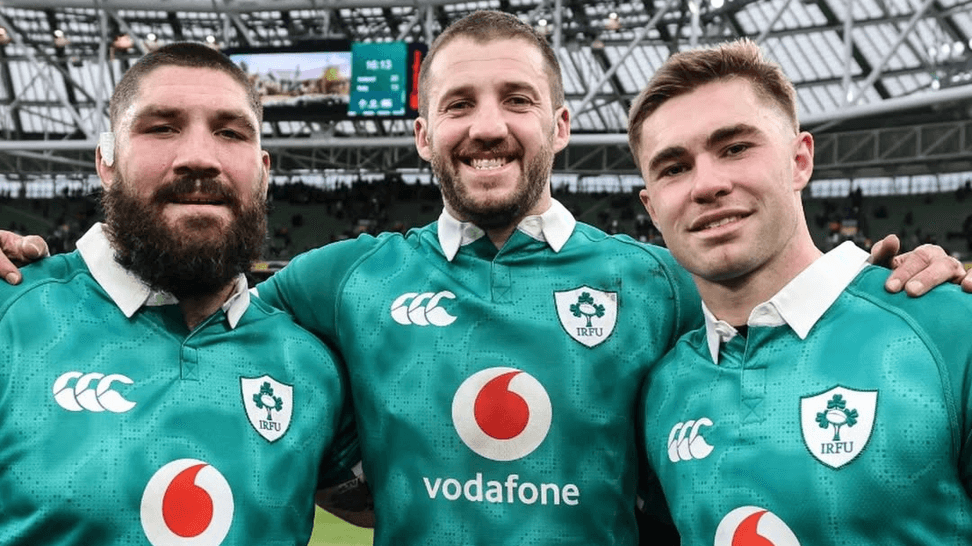
The Guinness Men’s Six Nations is over for another year, and what a tournament it was. Tries galore, shock results, comebacks, and performances that had fans leaping out of their seats.
Of course, nothing would be possible without the players. One hundred and ninety six players featured for the six teams in the 15 matches, and all played their part in the Championship’s narrative.
Some stood out more than others, and ATR looks at those players who really caught the eye for each team.
France – Charles Ollivon
A world class back rower for many years now, Ollivon has been a familiar figure in the number seven shirt for France and Toulon. Injury meant the 32-year-old missed the 2025 Championship, but he played twice in November and with his long-time number eight Gregory Aldritt not selected, he was seen as the wise head of the back row.
Then, Fabien Galthie picks him as one of his starting second rows for their opening match at home to Ireland, alongside another second-back rower, Mickael Guillard. It worked like a dream, with Ollivon’s agility and pace giving France’s attack another edge and he responded with their third of five tries in their victory.
He played their twice more, added another try, and came off the bench against Italy. Then, for the finale against England he started at number eight, a sign that maybe Galthie hadn’t quite found a replacement for Aldritt. Whatever, it was the French coach has now deepened his resources and can mix and match his engine room depending on how he wants to hurt the opposition.
Ireland – Stuart McCloskey
McCloskey made his debut 10 years ago against Italy in the Six Nations. The Ulsterman came off the bench alongside Josh van der Flier, but while the Leinster openside has made himself a fixture in the side, McCloskey’s appearances have been sporadic.
With Bundee Aki and Robbie Henshaw injured, and Ulster in ripe form, Andy Farrell turned to the 33-year-old to fill the gap at inside centre. Boy did he take his chance. France didn’t give him, or any other Irish back the chance to shine, but he began to hit form at home to Italy, with his strength and agility allowing him to put Jamie Osborne away for the first try.
Then came England, and their defence that just couldn’t handle his strong and direct running. McCloskey played a significant role in the build up to Robert Baloucoune and Dan Sheehan’s tries. His party piece came in the second half when he hunted down Marcus Smith and barrelled him into touch.
More was to come against Wales and Scotland. McCloskey’s long arms and one handed passes set Baloucoune and Tommy O’Brien away for tries against Scotland, and he led the celebrations at the end of a satisfying campaign. Having waited so long, you can hardly blame him for enjoying himself.
Scotland – Kyle Steyn
In a campaign in which Scotland head coach Gregor Townsend juggled his wing resources, it says a lot when you’re starting all five matches. After this year’s Championship it appears that, for now, the Glasgow Warriors wing is his first choice.
Steyn scored three tries, made 316 metres, and beat defenders 26 times. Like many of his Scottish teammates, his best showing came against France where he scored twice. In defence, he was especially impressive against England where his performance under the high ball damped Henry Arundell’s threat.
At 32 he isn’t going to be a long-term prospect for the Scots but having waited till he was 29 to make his international debut, he isn’t going anywhere soon.
Italy – Niccolo Cannone
A solid citizen, seemingly raised on Florentine steaks and hard labour. Alongside his brother and number eight Lorenzo Cannone, the elder of the pair gave Italy’s forward pack some vital heft in attack, defence and the breakdown.
When France drop their agile second rows of Ollivon and Guillard for your visit and replace them with the meatier duo of Thibaud Flament and Emmanuel Meafou, then you know you’re doing something right.
Cannone was the one who held Max Williamson aloft for his teammates to swarm around after the Scot went on a solo run and allowed the Azzurri to close out victory in Round 1. He maintained his work rate till the end with six tackles and six carries against Wales.
England – Joe Heyes
Probably England’s most consistent player, and one who filled a major hole in the tight after Lions tourist Will Stuart was ruled out for the entirety of the tournament. There was no issue for the Leicester Tigers man slotting in at tighthead to anchor the scrum.
Against Scotland, Ireland and France he helped England ended with a perfect record in the scrum, despite their issue elsewhere on the field.
The team’s history buff also weighed in in defence. He made 10 tackles against Scotland, and 12 apiece in the matches against Ireland and France. Having played so well, Heyes won’t be giving up the number three jersey easily once Stuart is back.
Wales – Aaron Wainwright
Aaron Wainwright is one of the few current Wales players who can remember the last time they enjoyed success. He made his debut in November 2018 and while he missed the 2019 Six Nations win, he was involved in the squad and later made the World Cup in Japan, where he was made famous for being on the end of a Sebastien Vahaamahina elbow that sparked Wales’s quarterfinal comeback.
Now, he is the wise old head, and he is playing extremely well. While his two tries against Italy caught the attention, he led the way for Wales in attack, defence and the tight.
He carried 66 times for 168 metres, beat 17 defenders and made 63 tackles. Not a bad return considering how much Wales were under the pump. Next season Steve Tandy’s side will aim to continue their upturn in form, which along with his move to Leicester Tigers from the Dragons means we are likely to see what he can do with more front foot ball. Who knows where he will lead Wales if that is the case.