Advertisement

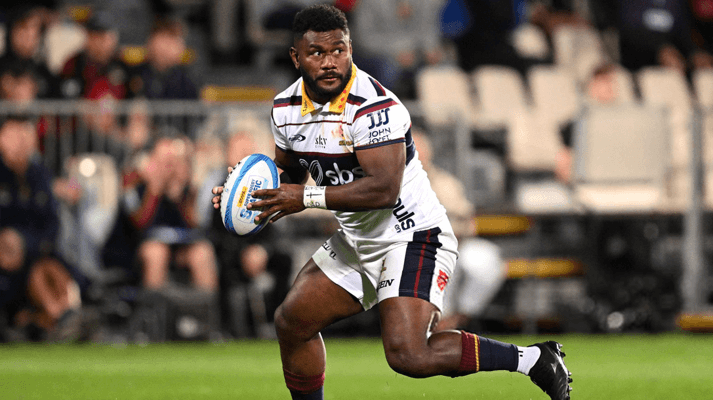
Round five felt less like the middle of March and more like the moment the competition cleared its throat and told us who is actually serious this year. The Hurricanes had to come from behind in Napier but still found a way to swat the Force aside, the Drua turned Churchill Park into a graveyard for the Brumbies’ perfect record, and the Crusaders finally remembered they are the Crusaders in a southern derby that asked real questions of the Highlanders’ revival.
In Brisbane, Carter Gordon was back on the try-scorers’ sheet as the Reds edged the Waratahs in another Suncorp street fight, a quietly emphatic addition to the redemption file he is building for the Wallabies’ No.10 jersey with every confident carry and shot at goal. By the time the Blues had re-asserted Eden Park’s natural order against Moana Pasifika, the table looked less like early-season noise and more like the start of a proper hierarchy: Hurricanes and Brumbies still out front, Blues and Reds nudging into position, and everyone else realising there are only so many seats left on the finals bus
| # | Team | PL | W | L | D | PD | BP | PTS |
|---|---|---|---|---|---|---|---|---|
| 1 |  Hurricanes Hurricanes | 4 | 3 | 1 | 0 | 85 | 3 | 15 |
| 2 |  Brumbies Brumbies | 5 | 3 | 2 | 0 | 43 | 3 | 15 |
| 3 |  Chiefs Chiefs | 4 | 3 | 1 | 0 | 30 | 1 | 13 |
| 4 |  Queensland Reds Queensland Reds | 4 | 3 | 1 | 0 | 5 | 1 | 13 |
| 5 |  Blues Blues | 4 | 2 | 2 | 0 | 19 | 2 | 10 |
| 6 |  Waratahs Waratahs | 4 | 2 | 2 | 0 | -2 | 2 | 10 |
| 7 |  Highlanders Highlanders | 5 | 2 | 3 | 0 | -21 | 1 | 09 |
| 8 |  Crusaders Crusaders | 5 | 2 | 3 | 0 | -23 | 1 | 09 |
| 9 |  Fijian Drua Fijian Drua | 4 | 2 | 2 | 0 | -17 | 0 | 08 |
| 10 |  Western Force Western Force | 5 | 1 | 4 | 0 | -42 | 0 | 04 |
| 11 |  Moana Pasifika Moana Pasifika | 4 | 1 | 3 | 0 | -77 | 0 | 04 |


Roigard (34'), Shields (48'), Flanders (51'), Harkin (59'), Dearns (67')
Tries
Lancaster (27', 69'), Faifua (73')
Barrett (48', 52', 60')
Conversions
Donaldson (74')
Penalties
Donaldson (22', 44')
For about an hour in Napier the Hurricanes looked less like title contenders and more like a very expensive science experiment in how many chances you can waste before the rugby gods lose patience. Down 8–5 at half-time and still trailing early in the second stanza, they had owned the ball, the territory and yet somehow found themselves watching Ben Donaldson drip-feed the Force a lead from the tee while Darby Lancaster ran in tries like he was back at club footy. Then the switch finally flicked; four tries in 33 minutes, five-pointers to Cam Roigard, Brad Shields, Devan Flanders, Callum Harkin and Warner Dearns, and a 31–23 win that looked much more comfortable on the scoreboard than it ever felt in the stands.
The pattern of the night tells you everything about where this Hurricanes side is at. With 57 per cent possession, 59 per cent territory, 129 carries and more than 800 metres with ball in hand, they stretched the Force from touchline to touchline, throwing fifteen offloads and forcing 162 tackles out of the visitors as Flanders, Du’Plessis Kirifi and Josh Moorby took turns punching holes in the line. Roigard kicked ten times and still found room to carry eight times for a try and four offloads, Jordie Barrett quietly stacked up eleven tackles and three conversions to steer the ship, and by the time Harkin and Dearns crashed over it felt like the inevitable payoff for an attack that had been threatening to crack things open since the first quarter.
And yet for all that dominance, the Force were one more big moment away from stealing something that would have looked outrageous on the balance of play. They finished with seven line breaks to the Hurricanes’ six, actually won more turnovers at the breakdown, and rode Lancaster’s 162 metres and two tries plus Donaldson’s eight points to stay on the right side of the scoreboard until the hour mark. Even as the Hurricanes’ bench came on and added fresh legs, Lopeti Faifua’s late burst underlined that this is still a side that can be stretched if you’re brave enough to keep asking questions with ball in hand rather than just kicking and hoping.
So McLean Park gets to file this one under “good win with homework attached”. The Hurricanes bank five points, stay tucked in behind the Brumbies on the ladder and add another reel of highlight footage for a back row and backline that look increasingly comfortable playing from anywhere. But in the coaches’ room they will be talking about 22 missed tackles, the way early pressure was turned into scoreboard scraps instead of a kill shot, and the knowledge that the better teams on their schedule will not be nearly as forgiving as the Force were when the game was there to be pinched.


Waqa (11'), Canakaivata (36'), Ravudi (44'), Droasese (51', 70')
Tries
Creighton (6'), MacPherson (26', 54'), Lonergan (58'), Muirhead (80')
Armstrong-Ravula (13', 37', 52', 71')
Conversions
Edmed (26')
Armstrong-Ravula (5', 28', 67')
Penalties
For the first time in their short history the Drua not only beat Canberra’s finest, they did it with a bonus point. 42–27 over the competition leaders, 20–12 at half-time, and a second half that turned a nervy arm-wrestle into another entry in the rapidly growing file marked; “why you really don’t want to be the Australian team flying into Fiji in March.”
What made it so compelling is that the Drua did it the hard way, without their usual share of the ball. The Brumbies had 56 per cent possession, more carries, more rucks and their maul rumbling, yet it was the hosts who dictated where the game was played, winning the territory battle 57–43 and making their 119 carries count for almost 800 metres, ten offloads and 25 tackle busts. Every time Rob Valetini or Andy Muirhead looked like they were dragging the visitors back into it – and between them they produced 33 carries and 246 metres – the Drua found another punch of their own, another dominant tackle, another kick from Isaiah Armstrong-Ravula to turn pressure into points.
Armstrong-Ravula might not have the highlight reel of some of his teammates, but this was the night he quietly put his hand up as the grown-up in the room. Fifteen points off the tee, game management that kept the Brumbies pinned in the corners, and a goal-kicking card that read five from seven while Tane Edmed and Ryan Lonergan combined to miss four conversions between them. Around him, the usual chaos merchants went to work: Ilaisa Droasese finished with 115 metres and a brace, Etonia Waqa and Elia Canakaivata tore through for first-half tries, and Sairusi Ravudi’s score straight after the break felt like the moment the visitors’ perfect start to the season finally snapped.
The Brumbies will point to their own chances; Hudson Creighton’s early strike, Toby MacPherson’s double, Muirhead’s consolation at the death and the fact they actually out-carried and out-rucked the Drua, but the numbers that matter are brutal. They missed 25 tackles, lost more rucks, and conceded fifteen turnovers, several of them in that horrible middle period where the Drua turned a one-score game into a 32–12 lead and the stands into a rolling, blue-and-green thunderclap. For a side that prides itself on control, accuracy and cool heads under pressure, this was a reminder that there are still places in this competition where the script can be ripped up in twenty minutes flat.
For the Drua, this is more than just another famous home win; it is proof they can bully and out-think one of Super Rugby’s benchmark sides over eighty minutes, not just ambush them for patches.
For the Brumbies, it is a necessary bruise, something to tape up and learn from before the knock-out games arrive, and a very loud warning that if they want to stay on top of the ladder, they are going to have to go back through Fiji at some point with a little more humility and a lot more bite in contact.


Jordan (3'), Newell (30'), Lee (49', 55')
Tries
Tele'a (19'), Ratumaitavuki-Kneepkens (26')
Reihana (31', 50', 56')
Conversions
Millar (27')
Reihana (67')
Penalties
Millar (35', 45')
For a month the Crusaders had felt like a prestige drama stuck in exposition; plenty of expensive talent, lots of ominous music, not much payoff. This, finally, was the episode where the plot kicked on. Down 15–12 at half-time and starved of both ball and territory, they came out after the break, tightened the screws, and put three unanswered scores on the Highlanders to close out a 29–18 win that felt as much like a statement to themselves as it was to the rest of the competition.
On the numbers, it should not have been their night. The Highlanders had 55 per cent of the ball, 65 per cent of the territory, more carries, more metres and more tackle breaks, with Timoci Tavatavanawai and Caleb Tangitau combining for 240 metres and twenty-four beaten defenders as they repeatedly ripped down the edges. For long stretches it felt like the men from Dunedin were the ones dictating terms, especially in the first half when Tanielu Tele’a and Jacob Ratumaitavuki-Kneepkens scored in quick succession and Cameron Millar’s boot nudged them into that three-point interval lead. But every time the Highlanders looked ready to kick clear, the Crusaders found a way to drag them back into the grind with an exit, a turnover or one of six dominant tackles that slowly tilted the collisions their way.
The difference, as it has been so often over the past decade, was that the Crusaders are ruthless in the twenty minutes that matter most. Will Jordan set the tone with an early try and never really went away, finishing with 132 metres, three-line breaks and eight defenders beaten off seventeen carries in one of those nights where he looked like he was playing on fast-forward. Fletcher Newell’s first-half close-range finish kept them in touch, and then after the break Johnny Lee walked through a career-defining purple patch, scoring twice in six minutes and turning a three-point deficit into a 26–18 lead almost on his own while Rivez Reihana calmly knocked over three conversions and a penalty to bank nine points and a rare, much-needed sense of order at ten.
Underneath the highlight stuff there was the hard work that will have pleased the coaches even more. Ethan Blackadder made seventeen tackles and carried seven times, Dallas McLeod and Tahlor Cahill chipped in with thirteen tackles apiece, and the Crusaders’ lineout went a perfect ten from ten on their own throw while the Highlanders lost four of theirs, blunting a key piece of their exit and launch game. Noah Hotham’s kicking numbers, thirteen punts and forty-six running metres, point to a side that was still operating off the back foot for long periods, but his two line breaks and the way he controlled the final quarter also hinted at a temperament that will not be spooked easily by early-season turbulence.
For the Highlanders, this will sting because it was there for them. They out-carried, out-ran and out-broke the Crusaders, had their two wings running riot, and for an hour their kick-pressure and phase shape had the home side playing out of their own half. But they missed twenty-four tackles, coughed up fifteen turnovers and saw a rock-solid set piece wobble just enough to give their rivals a way back in. Against almost anyone else in the competition that might still be enough; against a Crusaders side desperate to remind everyone – including themselves – who they are in New Zealand derbies, it was always going to leave the door open for the kind of ruthless fifteen-minute ambush that has defined this rivalry for years.


Wilson (6'), Gordon (63', 74'), Henry (70')
Tries
Adamson (16'), Moananu (57'), Potter (65')
Werchon (7'), Campbell (71', 75')
Conversions
Harvey (17')
Suncorp did what Suncorp usually does on a big Queensland New South Wales night. It turned a messy, tactical contest into something that felt personal. For an hour the Waratahs had all the ball and most of the field, 62 per cent possession, 58 per cent territory and nearly two hundred extra metres carried, yet somehow never shook the Reds off their shoulder. Then, in the space of fifteen second half minutes, the home side flipped a seven-point deficit into a 26–17 win, found themselves on the right side of another derby, and gave their fly half a few more pages for that redemption portfolio he is quietly building.
The opening act belonged to the pack and to Harry Wilson in particular. His seventh minute try set the tone for a Reds performance that was happy to spend long stretches without the ball. Queensland finished with 167 tackles, ten of them dominant, and four turnover tackles that repeatedly stalled Waratahs momentum just when it threatened to roll. Fraser McReight and Lukhan Salakaia Loto combined for thirty one tackles, Joe Brial added thirteen more, and the set piece held its nerve under pressure with fourteen lineouts won and eight clean scrums from eight, a small but important platform in a game where the Reds only had 90 carries to the Tahs’ 141.
For New South Wales, there was enough good tape here to make the loss sting. They went into the break level thanks to Jamie Adamson’s first half try and Sid Harvey’s boot, then edged ahead through Ioane Moananu and Harry Potter as the forwards and midfield began to win collisions. Clem Halaholo, James Hendren and Joey Walton all hit double figures for carries, while Hendren, Walton, Pete Samu and Max Jorgensen combined for more than three hundred running metres and a string of tackle busts. The problem was what happened at the sharp end. Nineteen turnovers and five missed place kicks meant long periods of dominance turned into only seventeen points, and when the whistle did go against them the Reds were ruthless.
The last quarter was where Suncorp turned red. Carter Gordon, who had been busy rather than brilliant early, took control of the game in the space of ten minutes with two tries and eighty running metres for the night, straightening the attack, taking on the line and reminding everyone why his name refuses to leave Wallabies conversations. Isaac Henry’s finish in the left corner and ninety nine metres carried capped an outstanding midfield shift, Jock Campbell quietly added almost a hundred metres of his own and went three from four off the tee, and Filipo Daugunu did what Filipo Daugunu tends to do in this fixture, beating five defenders and punching holes every time the Tahs kicked loosely in his direction.
By the end, the shape of it was familiar. The Waratahs left Queensland with more metres, more carries and more of the ball, but also with more turnovers, more missed tackles and another entry in a growing list of nights where they played enough rugby to win and still watched the Reds celebrate on the Milton Road end. Queensland, meanwhile, banked a victory built as much on attitude as execution, kept their home record against New South Wales trending the right way, and walked off knowing that if Gordon keeps stacking performances like this, the national conversation about the ten jersey is going to keep drifting north whether anyone in Sydney likes it or not.

Clarke (3', 8', 48'), Vai (21')
Tries
Taylor (32'), Reihana (36')
Barrett (4', 22', 49')
Conversions
Barrett (74')
Penalties
Reihana (2')
Eden Park can be a cruel place for visiting dreams, and on Sunday afternoon it reminded Moana Pasifika exactly where the power still sits in this particular Auckland relationship. The Blues did what the Blues tend to do at home in this fixture; they started fast, absorbed a wobble, then spent the second half turning pressure into points until the scoreboard looked every bit as lopsided as the locals had hoped, 43 to 7 with five unanswered tries after the break and the kind of swagger that had been missing from their game over the past fortnight.
The template was set early. Sam Nock was over inside five minutes, AJ Lam followed him in before the twenty minute mark, and although Mills Sanerivi’s close range effort and Patrick Pellegrini’s conversion briefly dragged Moana back into it at 15 to 7, Ofa Tu’ungafasi’s reply almost immediately before half time felt like a punch to the ribs just as the visitors were standing up straight. From there the Blues never let go of the chokehold. They finished with a shade more ball and territory, but the real story was how efficiently they used it, 133 carries for 886 metres, fourteen offloads and seven line breaks, turning Eden Park’s sun into a wide, fast track and dragging Moana’s big men around until the gaps appeared.
What will please the Blues coaches most is who drove it. The tight five, stung by what happened against the Crusaders last week, came out with a point to prove. Tu’ungafasi and Marcel Renata both crossed, Sam Darry topped the carry count with thirteen for 80 minutes of graft, and the pack as a whole laid on 20 successful lineouts even while losing five, a volume of attacking ball that eventually told on a Moana side asked to make 187 tackles. Behind them Beauden Barrett shook off an erratic start from the tee to finish with four conversions and nine kicks in play, pulling the strings territory wise while Codemeru Vai, Caleb Clarke and Xavi Taele cashed in out wide, combining for more than 280 running metres and four line breaks between them.
Moana will board the bus with bruises and a sense of what might have been. On paper they actually asked plenty of questions with ball in hand, finishing with 769 metres, thirty five tackle breaks and eight line breaks, numbers that usually keep you in a contest far deeper into the afternoon than this one did. Semisi Tupou Taeiloa and Sairusi Ravudi were constant threats, Sanerivi carried fourteen times for 76 metres through the middle, and Tevita Latu and Lalomilo Lalomilo both found space on the edges. The problem was that every punch seemed to land in isolation. Twelve penalties, thirteen turnovers and a lineout that coughed up four throws meant promising passages stalled before they could turn into repeat entries in the Blues’ twenty two, and when they did get there the hosts met them with six dominant tackles and four turnover hits that repeatedly flipped field position on its head.
By the time Mason Tupaea crashed over in the seventy eighth minute, it felt less like a late flourish and more like a natural full stop on a day that said as much about the Blues’ ceiling as it did about Moana’s current reality. For Auckland it was the response they needed, a reminder that when their skill level and physical edge line up, they can still blow teams away without ever needing to chase the game. For Moana it was another hard lesson in what it takes to live with New Zealand’s heavyweights over eighty minutes, and a stark piece of evidence that in this rivalry, at this venue, the gap is still wider than all the pretty attacking numbers would like to pretend.