Advertisement

Round 6 felt like someone sat on the remote and hit fast-forward. Under the roof in Dunedin the Hurricanes turned the Highlanders into a training drill, running for more than a kilometre and hanging a 50 on a New Zealand rival like it was nothing. In Auckland’s north the Crusaders did what the Crusaders do, spotting Moana Pasifika a lead and then calmly dumping fifty of their own on the board behind a backline that looked like it had been let out of captivity. The Reds went to Fiji and, somehow, won a game without scoring a point in the second half hour that anyone will remember.
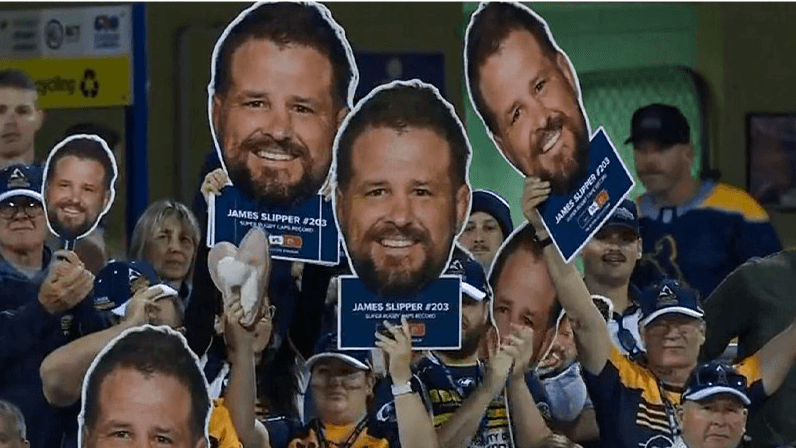
In Canberra, James Slipper jogged out for his 203rd appearance, nodded to the crowd, and in the space between anthems quietly became the most-capped player in Super Rugby history. Front-rowers aren’t supposed to own this sort of record. They do the jobs that don’t show up on Instagram. Slipper has done it for the Force, the Reds and the Brumbies, across expansion and contraction, law tweaks and broadcast deals, long before “Pacific” was bolted onto the end of the competition’s name.
While the backs were racking up hat-tricks and highlight packages this weekend, the round’s most important number was a simple one, 203. It’s a record built more on scar tissue than stardust, and in a competition that sometimes feels like it chews players up faster than it celebrates them, seeing a loosehead prop stand alone at the top of the appearance list felt like the most satisfying result of all.
| # | Team | PL | W | L | D | PD | BP | PTS |
|---|---|---|---|---|---|---|---|---|
| 1 |  Hurricanes Hurricanes | 5 | 4 | 1 | 0 | 128 | 4 | 20 |
| 2 |  Blues Blues | 6 | 4 | 2 | 0 | 70 | 4 | 20 |
| 3 |  Brumbies Brumbies | 6 | 4 | 2 | 0 | 52 | 3 | 19 |
| 4 |  Queensland Reds Queensland Reds | 5 | 4 | 1 | 0 | 20 | 2 | 18 |
| 5 |  Crusaders Crusaders | 6 | 3 | 3 | 0 | 6 | 2 | 14 |
| 6 |  Chiefs Chiefs | 5 | 3 | 2 | 0 | 21 | 1 | 13 |
| 7 |  Waratahs Waratahs | 5 | 2 | 3 | 0 | -17 | 2 | 10 |
| 8 |  Highlanders Highlanders | 6 | 2 | 4 | 0 | -64 | 1 | 09 |
| 9 |  Fijian Drua Fijian Drua | 5 | 2 | 3 | 0 | -32 | 0 | 08 |
| 10 |  Western Force Western Force | 5 | 1 | 4 | 0 | -42 | 0 | 04 |
| 11 |  Moana Pasifika Moana Pasifika | 6 | 1 | 5 | 0 | -142 | 0 | 04 |
Highlanders vs Hurricanes


J. Ratumaitavuki-Kneepkens (5')
Tries
C. Roigard (13', 20'), F. Fineanganofo (33', 61', 69'), D. Flanders (49'), B. Sullivan (65'), P. Lakai (79')
R. Pasitoa (6')
Conversions
R. Love (14', 20', 50', 66', 80')
Forsyth Barr is supposed to be a sanctuary for Highlanders rugby. On Friday night it felt more like a lab, and the Hurricanes spent eighty minutes running controlled experiments on what happens when you hand a side with that much power and clarity the ball and ask them not to stop.
Cam Roigard’s first try on 14 minutes squared the ledger, his second seven minutes later flipped the whole dynamic. Suddenly the Hurricanes were playing on fast ball, clearing rucks, and stacking phases at a pace the Highlanders simply couldn’t live with. By the time Fehi Fineanganofo crossed for his first try on 34 minutes, the visitors were already on their way to doubling the Highlanders’ carries and more than doubling their metres, an imbalance you rarely see between New Zealand sides under a roof.
If Roigard and Ruben Love provided the rhythm, the damage was done by a pack and midfield that looked perfectly aligned. In the backs, Fineanganofo produced a breakout performance; three tries, 164 metres from 12 carries, five defenders beaten and four line breaks, the sort of stat line that jumps off the page even in an era of inflated numbers. Jordie Barrett was everywhere else, carrying 17 times for 124 metres, beating five defenders, throwing three offloads and topping his side’s tackle count with ten, all while operating as a secondary playmaker and kicker. Between them, they gave Roigard and Love two thumping targets over the gain line, and the halves didn’t waste them.
Roigard finished with two tries, three defenders beaten and two turnover tackles, the full modern nine’s portfolio in one night. Love steered quietly but decisively, kicking nine times for territory, nailing five conversions from eight attempts, making three line breaks and handling the ball 24 times in the line. When your decision-makers are that in sync, and your forwards are winning the floor, rugby becomes a simple game.
Defensively, the contrast was brutal. The Highlanders were forced into 170 tackles and missed 32; the Hurricanes only had to make 72 and missed 24. Seven turnovers won to two kept the Highlanders from ever building sustained pressure and meant big individual shifts from TK Howden, Sean Withy and Jack Taylor never translated into momentum. Too many lineouts went awry and each mistake handed the Hurricanes another platform to launch from.
For the Highlanders, this is the sort of night that lingers. You can’t concede fifty at home in a derby, be doubled in metres and out-broken eleven-four, and chalk it up to bad luck. There are building blocks; a back three that can hurt teams, a back row that never stops tackling, a young ten still learning his craft, but they need a firmer identity for when the storm hits.
For the Hurricanes, this was more than just five log points. It was proof that their best version isn’t a romantic notion, it’s a very real problem for the rest of the competition. If they can carry even 80 per cent of this clarity and brutality into the colder months, there will be a lot more nights where the scoreboard, and the stats sheet behind it, look just as unforgiving.
Brumbies vs Chiefs


H. Creighton (4'), R. Lonergan (58'), C. Cale (63'), D. Meredith (69'), C. Toole (78')
Tries
L. Coombes-Fabling (16', 21'), D. McKenzie (55')
R. Lonergan (5', 64', 70', 79')
Conversions
D. McKenzie (17', 22', 56')
Penalties
D. McKenzie (40')
Canberra has seen enough of the Chiefs over the last few years to know exactly how this is supposed to go. Five straight losses in the fixture, an average margin north of 18 points, and a New Zealand side that has made a habit of walking into GIO Stadium, taking the Brumbies’ best shots and still finding a way to stroll out with a bonus point and a shrug. This time felt different before kick-off. The Brumbies came in having dropped two in a row after a 3–0 start, desperate to prove they’re still the Australian side most capable of going toe-to-toe with New Zealand, while the Chiefs arrived having won eight of their last nine against Australian teams but still stinging from a Crusaders defeat and with just four games of form to hide in.
The Brumbies played exactly the sort of rugby their numbers have been screaming all season. No side in the competition sends the ball through first receiver more often, and no forward touches it there more than Rob Valetini, who once again acted as the primary launch pad. Declan Meredith kept punching the corners and asking the Chiefs to exit under pressure. The idea was simple; own the middle, play off nine and ten, squeeze territory, and trust the detail around maul, scrum and lineout to do the rest. With 90-plus per cent lineout success and the highest ruck retention in the competition, it is a plan that usually travels.
The Chiefs, as ever, brought a different sort of chaos. They arrived leading the comp for turnover wins at eight per game and already sitting on four tries from turnover ball, a figure bettered only by the Brumbies themselves. In Sam Cane’s absence they’ve built that disruptive streak around a loose trio and midfield that hunt on instinct and live off scraps, and this night was no different. Every time the Brumbies dared to play one pass too wide or hang in contact a fraction too long, there was a black jersey on the ball and a sudden lurch in momentum. It’s no accident that both sides top the chart for tries scored immediately after winning possession; when this fixture opens up, it does so violently.
Out wide, the individual subplots were pure Super Rugby. Charlie Cale came in as the competition’s leading try-scorer with seven in four games, a back-rower operating with a winger’s instincts and a hooker’s appetite for close-range work. Andy Muirhead, now leading the tournament in offloads with ten kept doing what he always does, drifting in off his wing to act as an extra playmaker, throwing risky, brilliant touches that keep defences honest and break assist tallies ticking. For the Chiefs, Leroy Carter carried his own ridiculous numbers into Canberra, having been directly involved in six tries in just three outings and with a history of hurting the Brumbies after laying on a score in their last meeting in 2025. When those men got ball in space, you could feel the ground lean forward just a fraction.
In the end, what this game underlined wasn’t just who walked away with the points, but what it now takes to beat New Zealand opposition if you’re wearing an Australian badge. You need a forward like Valetini willing to live at first receiver, a finisher like Cale who can turn half-chances into sevens, a nine-ten axis like Ryan Lonergan and Meredith prepared to kick on their own terms rather than in panic. You also need to be just reckless enough to keep someone like Muirhead in the game, even when the offloads wobble. The Chiefs, for their part, showed yet again that form lines and travel stats matter less than the simple truth that if they can generate turnovers and win the race to 30 points, they are almost impossible to put away. On nights like this, when both teams lean into their identities rather than away from them, Brumbies-Chiefs is still one of the few fixtures in Super Rugby that feels like it has genuine playoff weight stamped across the top of the programme.
Fijian Drua vs Reds


Tries
K. Thomas (24'), H. McLaughlin-Phillips (54'), R. Asiata (62')
Conversions
H. McLaughlin-Phillips (25', 55', 63')
I. Armstrong-Ravula (12', 30')
Penalties
Churchill Park has never been kind to Australian sides, and for forty minutes this felt like another entry in the same book.Ssticky heat, a skittish ball, and the Drua running from everywhere with just enough chaos to keep the Reds one mistake away from real trouble. In the end, though, Queensland walked out with something you almost never see in Fiji; a 21–6 win built not on composure, defence and a ten who seemed to grow with every touch.
The scoreboard says the Drua failed to score a try; the numbers behind it tell you that’s a minor miracle. They broke 30 tackles to the Reds’ 20 and still somehow never found a way through. Elia Canakaivata played like a man trying to win the game on his own, carrying 19 times for 177 metres and beating six defenders, Ilaisa Droasese added 169 metres from 16 carries and three tackle busts of his own, and Kitione Salawa rolled his sleeves up for nine carries, 62 metres and 13 tackles. This was not a Fijian side starved of opportunities; it was one repeatedly turned away at the moment it usually turns contests into chaos.
For half an hour the Reds walked that tightrope. Isaiah Armstrong-Ravula missed his first shot at goal but nailed the next two to push the Drua out to 6–0 and then, after Kalani Thomas had sniped over from close range and Harry McLaughlin-Phillips added the extras, to drag it back to 7–6 at the break. The Drua were winning the gain line, producing four-line breaks to one and forcing Queensland into 20 missed tackles. It was tense, messy, exactly the sort of contest that has unravelled Australian teams on these islands more often than they like to remember.
What changed the game was Queensland’s willingness to stay boring while everyone around them itched to play. As a unit the Reds finished with 152 tackles to the Drua’s 100, six turnover tackles to four, and six turnovers won overall to just two in reply.
Then, as the humidity started to sap legs, McLaughlin-Phillips took the game away. On 55 minutes he picked his line, straightened, and sliced through for the try that shifted the whole mood of the evening. Nine minutes later, with the Drua now chasing scores instead of building them, Queensland turned pressure in the 22 into another close-range punch, Richie Asiata crashing over to make it 21–6. From there it was all about exits. Kalani Thomas had already laid the platform with his first-half score and 13 tactical kicks; Louis Werchon came on and calmly added three more, while Jock Campbell and Filipo Daugunu chipped in from the backfield.
The irony for the Drua is that some of their numbers will sit nicely in the review. They won 16 lineouts, pinched one of Queensland’s and split the scrum battle, six wins each with the Reds coughing up the only two losses. Salawa, Mesake Vocevoce and Etonia Waqa got through heavy defensive shifts, and Armstrong-Ravula’s game management for 80 minutes was largely on point. But two turnovers won is not enough when you play this much ball.
For the Reds, this will never be a highlight-reel classic in the way their 52–7 demolition of the Drua in Brisbane last year was. It will, however, mean almost as much inside the four walls. To come to Fiji, absorb that many punches, be out-carried, out-metred and out-broken, and still win 21–6 is the sort of result that travels in July. It says their defence is for real, that their young ten can manage a game in hostile conditions, and that they are learning how to win in ways that don’t rely on everything going right with ball in hand. For a club that has worn the “soft travellers” tag for too long, that might be the most important line in the match report.
Moana Pasifika vs Crusaders


T. Ofa (20'), J. Lam (28'), S. Nginingini (77')
Tries
B. Ennor (3'), S. Reece (16'), C. Fihaki (33', 72'), L. Fainga'anuku (49'), G. Bell (52', 57'), K. MacDonald (61')
P. Pellegrini (21', 29', 77')
Conversions
C. Grant (17'), C. Fihaki (50', 53', 58', 62')
North Harbour Stadium has seen its share of Crusaders beatdowns over the years, but this one came with a cruel little twist. For forty minutes Moana Pasifika went punch for punch with the dynasty, led, scrambled, and walked into the sheds only three points down with the scoreboard reading 17–14 and the sense that the men in blue were very much alive. By full time it was 50–21, another half-century chalked up in red and black and another reminder of just how ruthless this era of Crusaders can still be when given even the slightest invitation.
The start was pure Crusaders. Braydon Ennor went over after four minutes, Sevu Reece followed on 17, and when Chay Fihaki scored their third on 34 minutes the visitors had already flashed most of their attacking shapes. But in between, Moana did what Moana do when the game breaks loose. Tevita Ofa crashed over on 21 minutes, Joel Lam danced through eight minutes later, and with Patrick Pellegrini nailing both conversions they had turned 12–0 into 14–12 and dragged the contest into that messy middle ground where they usually thrive. At half time the Crusaders had the better of possession and territory but only just. This was not a side overawed by the jersey in front of them.
What killed them was what has killed so many before, eighty minutes, not forty. The raw attacking numbers are almost indecent. Will Jordan was back in that familiar, horrible mood, taking 15 carries for 116 metres, beating five defenders, throwing three offloads and kicking four times in a performance that made the field feel about ten metres wider every time he touched it. Leicester Fainga’anuku went one better in pure yardage, hammering out 130 metres, and his try early in the second half was the spark that turned a close game into a rout. Around them Dallas McLeod and Xavier Saifoloi quietly piled up 67 metres apiece, chipping in with offloads and hard carries that kept Moana’s line folding back on itself.
Then there was Fihaki, who turned a good night into a career one. He scored the first-half try that nudged the Crusaders in front, then spent the second forty methodically pulling Moana apart. From 17–14 at the break the scoreline lurched to 45–14 in just over twenty minutes, the Crusaders running in four tries between the 50th and 63rd minutes and turning the closing stages into a procession.
Underneath all that shine were the same old Crusaders pillars. Their pack won 14 lineouts from 15, lost just one scrum, and had nine different forwards hit double figures in tackles, with Jamie Hannah and George Bell both racking up 11 and Ethan Blackadder adding another 11 along with 10 carries. The penalty count, 6–13 in their favour, told its own story about which side kept its discipline as fatigue set in. When you’re being asked to make 178 tackles and you miss 36 of them, as Moana did, the flood is only ever one clean carry away.
So Moana are left with bruises, highlight clips and another scoreboard that flatters nobody in their camp. The Crusaders walk away with something much more concrete. This was their attack as it is drawn up on whiteboards; heavy possession, relentless carrying, width on their terms, and a backline clinical enough to turn a tight contest into a runaway in half an hour. They won’t always have this much ball, but the rest of the competition will look at North Harbour and remember, uncomfortably, that when they do, fifty is still very much in play.
Waratahs vs Blues


J. Debreczeni (30'), T. Lambert (40')
Tries
F. Christie (2'), C. Vai (49'), A. Lam (56', 73'), T. Barnes (80')
S. Harvey (31', 40+2')
Conversions
B. Barrett (57', 74')
S. Harvey (21', 43')
Penalties
B. Barrett (38', 62')
For forty-five minutes at Allianz Stadium, the Waratahs looked like the version of themselves Sydney keeps being promised and so rarely gets. Up 20–8 just after half-time, with the Blues conceding penalties, losing lineouts and being kicked back into their own half, it felt less like an upset brewing and more like a statement about who was actually dictating terms. By full time it read 35–20 to the Blues, another New Zealand comeback logged and another lesson in how quickly control can evaporate when you keep leaving the door ajar.
The opening exchanges framed the night. Finlay Christie struck first after three minutes, finishing the kind of crisp, multi-phase movement that has become the Blues’ signature, but the Waratahs answered with the sort of control they have too rarely found against Kiwi sides. Sid Harvey settled the contest with a penalty on 22 minutes, Jack Debreczeni sliced through nine minutes later, and Harvey’s conversion pushed the hosts ahead 10–5. Just after the break, Tom Lambert crashed over from close range, Harvey added the extras and another penalty, and suddenly New South Wales had flipped 5–0 down into a 20–8 lead.
What they didn’t have was the Blues’ ability to compress a game into a fifteen-minute burst. Codemeru Vai’s try on 50 minutes narrowed the gap and reset Auckland’s heartbeat. AJ Lam’s first score on 57 minutes, followed almost immediately by Beauden Barrett’s conversion and then his penalty on 63, swung the scoreboard and the mood in one ruthless passage. From 20–8 up, the Waratahs suddenly trailed 23–20 and were the ones chasing. Lam’s second try on 74 minutes, again converted by Barrett, and Torian Barnes’ finish after the siren turned a tight test into a bonus-point win, the Blues piling on 27 unanswered points from the 50th minute. They finished with five tries to two and 22 tackle breaks to 14, their class in the red zone undoing an evening in which they had often been second best everywhere else.
Barrett, even on an untidy night off the tee, sat at the centre of the swing. He missed three conversions, but still walked off with 10 points from two penalties and two conversions.
The Waratahs, by contrast, found out what happens when you keep inviting pressure. Thirteen penalties to six and 19 turnovers conceded to nine is the stat line of a team determined to make life hard for itself.
What will sting most is that their attacking edge finally showed up. Harvey produced the best game of his young career; 166 metres from 13 carries, six defenders beaten, three line breaks, 10 points and five well-weighted kicks. Lawson Creighton added 91 metres from 14 carries, Clem Halaholo 68 from 10, Joey Walton 66 from nine and Debreczeni 58 from six, giving the Waratahs a backline that consistently bent a New Zealand defence. They moved the ball to space, played on top of the Blues’ line and gave Allianz a performance it could feel. They just couldn’t marry that with the composure the Blues found when it mattered most.
The Blues fly home with four points and a reminder that even on a messy night they have the tools to reel in a deficit and break a game open. The Waratahs are left with a familiar frustration; the metrics say they belonged on the field with one of the competition’s heavyweights, but the only columns that really matter; penalties, turnovers and the final score tell a different story.