Advertisement

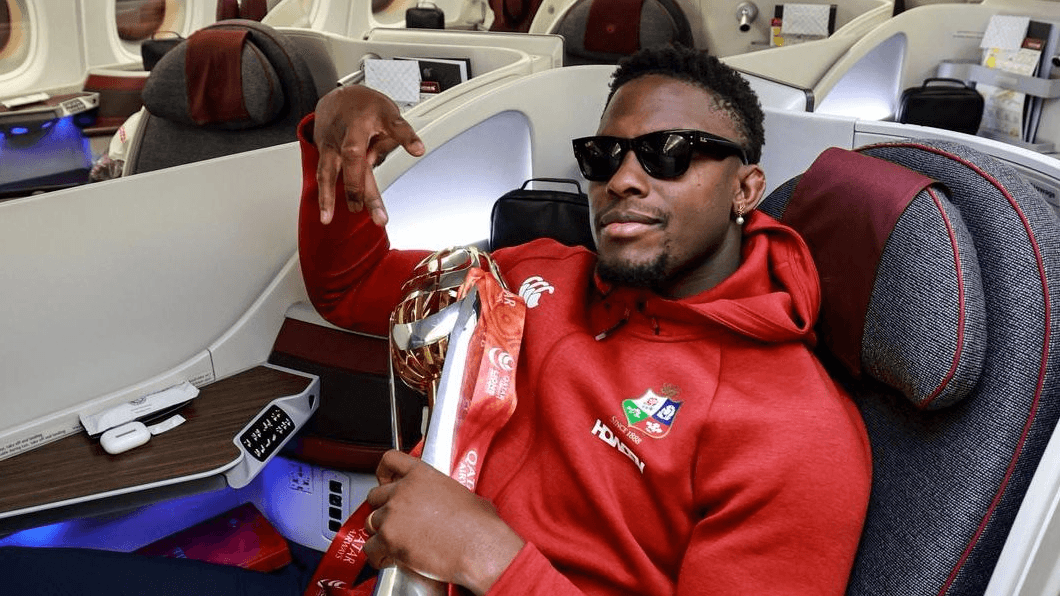
It ended as it started for the British and Irish Lions, with defeat. But between Argentina in Dublin to Australia in Sydney, there were eight victories.
Test wins in Brisbane, and an oh so close encounter in Melbourne locked up the series win before the third clash at Sydney’s Stadium Australia. The second was a stone-cold classic that went down to the wire and gave those watching everything you could want from an international rugby match.
There were six tour matches, all of which the tourists won, but few of which helped light the touch paper on the tour. Mostly they followed the same pattern; a close start, an early bloody nose for the Lions, and then a second-half rout as the hosts failed to maintain their intensity.
That said, there will be plenty to remember, and ATR looks back on the tour and how it finished as it did.
ENDS JUSTIFY IT ALL
Lions head coach Andy Farrell had one job when he was appointed, and that was to win the test series.
Series wins are rare. South Africa in 1997 was the first in the professional era, then there was Australia in 2013, and that was it, though the drawn New Zealand 2017 series was highly memorable.
Australia 2001 and South Africa 2009 were a close as possible but lost, while New Zealand 2005 and South Africa 2021 were forgettable for the Lions, for a myriad of reasons.
If that meant that everything Farrell did was with the aim of winning the series. Selections, pairings, late call-ups, tactics, and style. All were about winning, and he achieved it.
That is all that mattered and why he deserves the plaudits.
It was why there was little sentiment in his team selections. It is why he called his son up mid-tour. It was why he was smiling in the Sydney rain. It is why the celebrations will have been long. No excuses, just satisfaction that the job was done.
LAND DOWN UNDER
We knew a tour to Australia is different to New Zealand and South Africa where the sport is number one to a massive extent.
We knew that Aussie Rules dominates Victoria, South Australia, and Western Australia. We knew rugby league is king in New South Wales and Queensland, especially this time of year when State of Origin is on.
We knew they both have mega television deals of around AU$400million a year that dwarfs rugby union, and has increased their dominance, at least domestically.
We knew that Australian rugby was on a downer. Knocked out of the last World Cup at the group stages after Eddie Jones’ hatchet job, and with the Brumbies and Queensland Reds desperately trying to muscle between the Kiwi teams in Super Rugby, while New South Wales Waratahs, and Western Force struggle. Let’s not talk about Melbourne Rebels fate.
Yes, it was disappointing that the test players weren’t released for the tour matches, or that between May and the first test in mid-July they only had the one match which meant the Wallabies started the test series badly undercooked. That was Rugby Australia’s problem.
But it is still Australia, a proud rugby nation with a strong history, and one that has always punched above its weight. Rugby hasn’t got that many leading sides that it can let a double World Cup winner wither on the vine.
Some of the talk of the Lions not returning was ridiculous and basically insulting to the host nation. In fairness, the BBC’s Chris Jones raved about the country from the moment he set foot on Aussie soil to balance the argument. Expect Tourism Australia to give him a call soon.
We saw that the Aussies can churn out outstanding openside with the best of them, with the Waratah’s Charlie Gamble producing two stellar performances. The backs showed they can fizz in all conditions, and that they are happy to play wet-weather, kick and chase rugby when needs be, as was the case in Sydney.
The Lions staff and players talked up the experience too, so they will be back in 2037. There has been plenty of talk from Australia rugby stakeholders of streamlining the system similar to the Irish system to help them improve. It would be a good starting point.
MONEY, MONEY, MONEY
No one is leaving this tour empty-handed. The Lions are reported to have made £10million, Rugby Australia over AU$100million, and even the players can probably afford that extension to their house now after reportedly pocketing £100,000.
Those figures alone tell the story of why the Lions will be back. They will also go a long way to turning around Rugby Australia’s AU$36.8 million loss in 2024.
That said the tour gave the Australian sporting landscape memorable images.
Packing 90,000 into the Melbourne Cricket Ground shouldn’t be underestimated in the effect it will have. Those images and clips will keep going for a while and will have made the casual sporting fan sit up and take notice of what one of their national teams can do.
Ditto those from Stadium Australia.
After all, you win the hearts and minds, and the wallets soon follow, which should mean Rugby Australia can move forward to the Men’s and Women’s World Cups without making the bottom line the overriding priority.
TOUCHING GREATNESS
And yet, and yet. It is not that often that a team has the chance to win three tests from three on tour. Rarer still for a Lions team, which hasn’t had the chance since South Africa in 1997.
That year an exhausted, and sated Lions team went into the third test with whoever could walk, against a South Africa team who were desperate to win, just as the Wallabies were.
In 2009, having lost the series, Lions coach Ian McGeechan brought back Shane Williams, Ugo Moyne, and Phil Vickery for the third test with points to prove, while Martin Williams and Joe Worsley replaced Paul Wallace and Tom Croft to freshen up the pack after two brutal tests.
Could Farrell have done something similar? Could Alex Mitchell have come in for a Jamison Gibson-Park who was not at his best in Melbourne. The same could be said for Sione Tuipulotu, who could also cover outside centre, in the way the underperforming Bundee Aki couldn’t.
There was also something disappointing when the cameras cut to the changing room during the lightening break. Finn Russell and Tom Curry twiddling on their phones, Aki having a leisurely cycle, others having a casual chat.
Where was the team, angry that they hadn’t landed a blow? Where were the coaches frantically changing tactics? Where was the backline planning? Where was the forward pack coming together in tricky circumstances? Where was the desperation to win three-nil?
It was back on the MCG turf, in a circle toasting their success in the series, knowing the job was done.