





Ireland



Fiji
T. O'Brien (7', 59'), R. Baloucoune (29', 38'), R. Kelleher (45'), A. Porter (53'), N. Timoney (76')
Tries
J. Tuisova (18'), P. Yato (22')
S. Prendergast (8', 53', 60'), C. Frawley (77')
Conversions
B. Volavola (23')
Penalties
B. Volavola (40+2')
Ireland beat Fiji 43–15 at Aviva Stadium on 14 November, scoring seven tries in a Nations Championship win built on 26 unanswered second-half points.
Tommy O’Brien and Robert Baloucoune each scored twice, with Ronan Kelleher, Andrew Porter and Nick Timoney also crossing. Fiji had led 12–7 and trailed by only two points at the interval, but Ireland kept them scoreless after the break and turned a close contest into a comfortable victory.
Fiji threaten before Baloucoune’s double
O’Brien’s seventh-minute try, converted by Sam Prendergast, gave Ireland the first advantage. Fiji answered through Josua Tuisova and Peceli Yato, and Ben Volavola’s conversion of Yato’s score put the visitors 12–7 ahead.
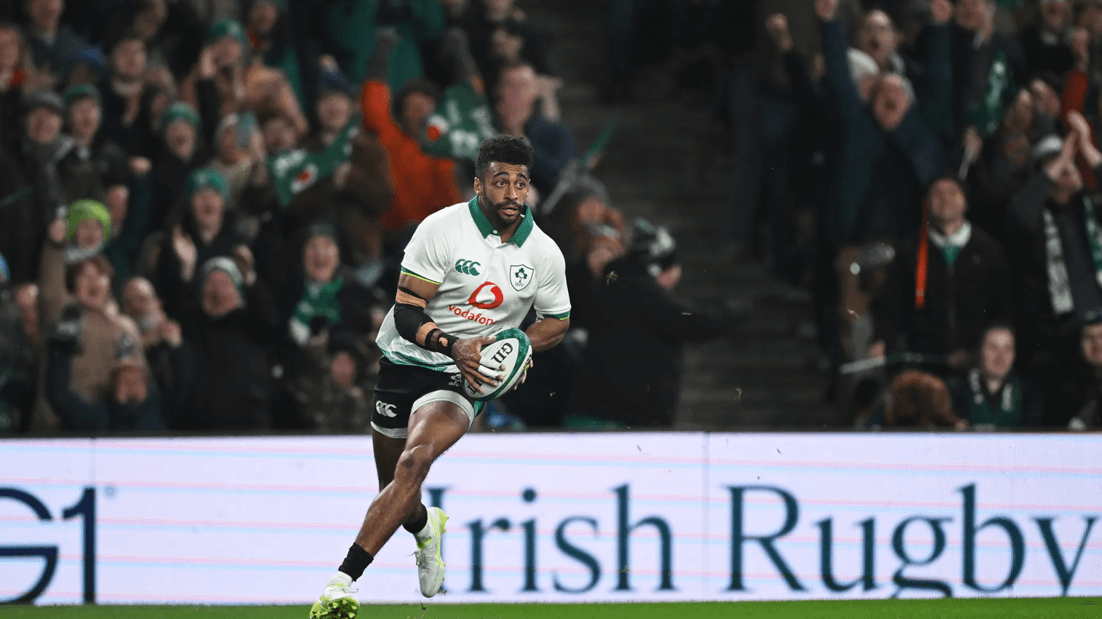
Baloucoune supplied Ireland’s response with tries in the 29th and 38th minutes. Neither was converted, leaving the hosts 17–12 in front rather than giving them the room their three-try return might otherwise have created.
Fiji remained firmly in the match. Tadhg Beirne was shown a yellow card in first-half stoppage time, and Volavola’s penalty reduced Ireland’s lead to 17–15 at half-time. The visitors had made enough of their opportunities to ensure the result was still in doubt.
Four tries turn the second half
Kelleher scored Ireland’s fourth try five minutes after the restart, extending the lead to seven points. Porter followed in the 53rd minute, with Prendergast’s conversion taking the score to 29–15. Fiji also lost replacement Inoke Ravuiwasa to a yellow card during this phase of the match.
O’Brien completed his double in the 59th minute. Another Prendergast conversion made it 36–15, giving Ireland a 21-point cushion and leaving Fiji with a much harder task than they had faced at the interval.
Timoney added the final try in the 76th minute, and Ciaran Frawley converted to complete the scoring. Ireland’s four second-half tries were accompanied by a defensive shutout: Fiji’s last points had come from Volavola’s penalty before the break.
Finishing makes the difference
The match was not simply a story of Ireland monopolising territory. The IRFU’s match figures gave the hosts 55 per cent possession, while Fiji held 52 per cent territory. The decisive contrast was on the scoreboard, where Ireland turned a three-tries-to-two first half into a seven-tries-to-two finish.
Baloucoune’s double had repaired the early deficit; O’Brien’s second score helped put the game beyond Fiji’s reach. Kelleher, Porter and Timoney ensured the scoring threat extended beyond the wings, while Ireland’s ability to prevent a second-half response allowed each additional try to increase their control.
Fiji’s opening half showed why the final margin should not erase their early challenge. They led, scored through two of their most dangerous carriers and reached the interval within a single score. Their inability to add to those 15 points was the central difference after the restart.
South Africa next for Ireland
Ireland return to Aviva Stadium to face South Africa on 21 November. Fiji travel to Udine to meet Italy on the same day. For Ireland, this was a strong finish to a match that had demanded a response; for Fiji, the task is to turn a competitive first half into a performance sustained across the full 80 minutes.
Main photograph: Robert Baloucoune runs in Ireland’s second try against Fiji at Aviva Stadium on 14 November 2026. Credit: Ramsey Cardy – Nations Championship/Nations Championship via Getty Images.