





Ireland


Fiji
Ireland host Fiji at Aviva Stadium on Saturday 14 November, with Tadhg Beirne captaining a side built to control possession and keep the visitors’ dangerous runners away from loose ball. Kick-off in Dublin is 20:10 GMT.
The hosts come into this Nations Championship Round 5 meeting after beating Argentina 42–12. Fiji lost 54–17 to France and are still seeking their first win of the competition. Ireland have three victories from four matches, but the route to another depends on disciplined decisions rather than assuming the form book will settle the contest.
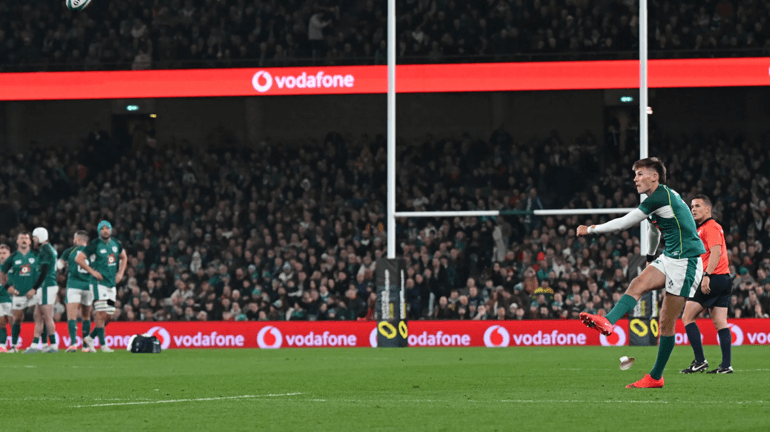
Photo: Sam Prendergast kicks a conversion against Argentina in Dublin on 6 November. Charles McQuillan – Nations Championship/Nations Championship via Getty Images.
Ireland’s announced selection
Beirne partners James Ryan at lock, with Ryan Baird, Josh van der Flier and Nick Timoney in the back row. Jamison Gibson-Park and Sam Prendergast are the half-backs, Bundee Aki joins Jamie Osborne in midfield, and Mack Hansen starts at full-back with Robert Baloucoune and Tommy O’Brien on the wings. Ronan Kelleher starts at hooker between Andrew Porter and Tadhg Furlong.
Andy Farrell has included uncapped back-rower James McNabney among the replacements. Craig Casey, Ciaran Frawley and Stuart McCloskey provide the bench options behind the scrum. The selection combines familiar decision-makers with players who have an opportunity to shape the final stages.
Keep the next possession connected
Ireland’s best attacking sequences should begin with support around the carrier. Fiji can make a straightforward-looking carry expensive when the ball becomes exposed, and an isolated runner gives the defence a chance to slow the next phase or win it back. The hosts need to arrive together and keep Gibson-Park’s options clear.
Prendergast’s task is to recognise when the defence has narrowed and when it has already recovered. Aki can draw attention close to the gain line, while Osborne and the back three offer routes beyond it. The decisive pass should come because space has been created, not because Ireland feel obliged to move the ball wide after a fixed number of carries.
Fiji’s opportunity lies in the transition
Fiji remain capable of turning a small opening into a major change in momentum. Ireland must be particularly alert after a kick, a loose pass or a tackle that releases an offload. Defenders who watch the ball can lose the next runner; those who stay connected can force the attack to start again.
The visitors also need enough control to earn those opportunities. Repeated penalties would allow Ireland to build pressure through territory and the lineout. A more competitive contest requires Fiji to protect their own possession, complete their exits and make the hosts work through several phases before finding space.
For Beirne and his pack, the challenge is to balance ambition with field position. Ireland can attack when the picture is favourable, but a well-chased kick can be the better decision when support is stretched. The replacements will inherit the same responsibility: maintain the structure that creates chances without making the closing stages unnecessarily chaotic.
ATR verdict
Ireland to win with room to spare. Their organisation and range of attacking options should prove decisive if they keep errors and penalties under control. Fiji’s ability to strike from broken play means the hosts still need patience and accurate defensive spacing throughout the evening.