





England


New Zealand
H. Slade (4'), van Poortvliet (31'), B. Earl (35'), O. Chessum (42'), S. Atkinson (62')
Tries
de Groot (38'), B. Barrett (51')
F. Smith (31', 36'), M. Smith (63')
Conversions
D. McKenzie (51')
M. Smith (56', 80')
Penalties
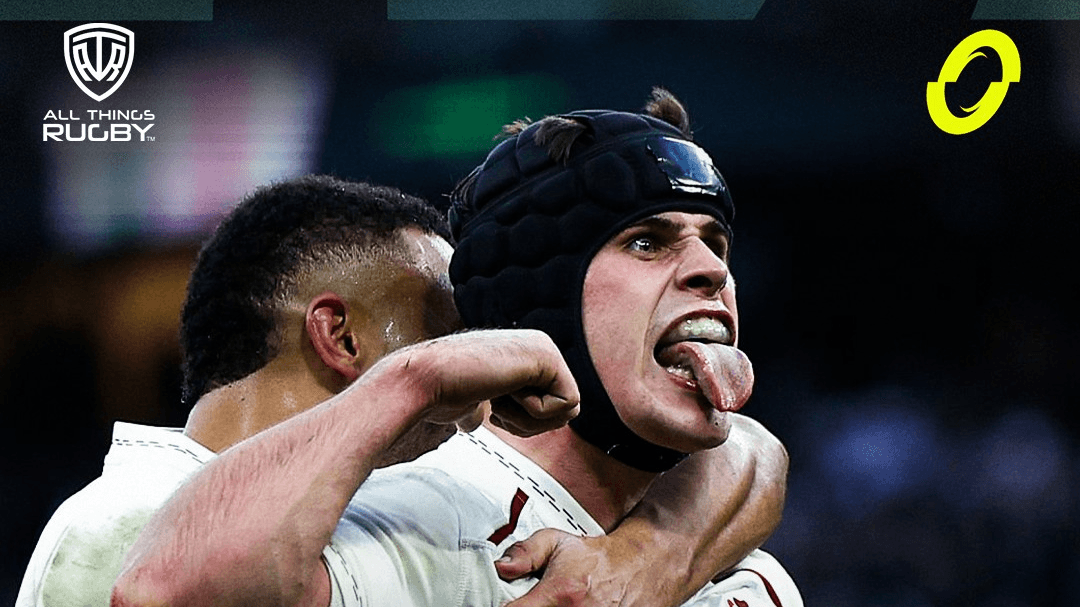
England beat New Zealand 37-12 in Round 6 of the Nations Championship, scoring five tries to two and taking 25 points from six games. France’s bonus-point win later that evening left England second in the North. Ben Earl's remarkable workload at number eight set the tone as the All Blacks, already beaten by Wales a week earlier, were out-carried and out-tackled.
England have spent much of 2026 being asked what they are when the game is stretched, and this was as emphatic an answer as they could have wished for. Against a New Zealand side that had arrived with defeat by Wales still fresh, they won the contest through a simple, heavy-handed superiority in the collisions, then finished it with the sort of tries that come when a defence is tired of making tackles. Five tries to two and a 25-point margin is a result that stands up to scrutiny, and the underlying figures suggest it was, if anything, no more than the balance of play deserved.
The numbers that matter are not the headline ones. England had roughly two-thirds of the possession, made 174 carries to New Zealand's 109 and beat 31 defenders to the visitors' nine. New Zealand were asked to make 228 tackles and missed 35 of them, while England made 116 and missed 15. That is a side being run ragged in the wrong direction. When a team spends the afternoon defending that much, the errors accumulate in the places that hurt, and New Zealand conceded 16 turnovers and 10 penalties as the pressure told.
Where it was won
Henry Slade's early try gave England the first score, and the decisive spell came either side of the interval. Jack van Poortvliet and Ben Earl added tries around the half-hour mark, both converted by Fin Smith, which turned a contest into a 19-5 lead even after Ethan de Groot had given New Zealand a foothold just before the break. Ollie Chessum then crossed soon after the restart, and that fourth England try in a little over ten minutes of play either side of the break was the moment the visitors' game plan visibly strained.
The set piece gave England the platform. Their scrum was flawless, seven from seven, and they won ten of eleven lineouts against New Zealand's eight from twelve, with Jamie George finding his jumpers consistently. Clean ball from those restarts let England play with front-foot momentum, and the back three of Cadan Murley, Will Joseph and George Furbank repeatedly found space because New Zealand's line was already backpedalling. Murley and Joseph between them made 120 metres, and Joseph's four beaten defenders were a good measure of how stretched the New Zealand edge became.
The bench mattered too. Marcus Smith came on for Fin Smith and kicked two penalties and a conversion for eight points, and he was involved in the build-up to Seb Atkinson's try that closed out the scoring in open play. Greg Fisilau added ten carries and five beaten defenders from the replacements' bench, and Ellis Genge's 47 metres kept the gain line moving when the starting forwards tired. New Zealand's second-half response, Beauden Barrett's try converted by Damian McKenzie, briefly made it a game at 24-12, but England answered within minutes through Marcus Smith's penalty and Atkinson's score, and the contest was settled.
The standouts
Ben Earl was the best player on the pitch by a distance. He carried 32 times for 146 metres, beat seven defenders, made two clean breaks and an unexpected pair of offloads, and still found time for 15 tackles and a try. That kind of volume at number eight is rare, and it did more than pile up statistics: every time Earl carried, New Zealand had to commit two or three bodies, and that is how the wide channels opened. Chessum was his partner in damage, with 43 metres, ten tackles and a try, a flanker who carried and defended with equal conviction.
In midfield, Atkinson's 13 carries gave England a direct, hard-running option at inside centre, and the way he and Slade worked together made England's attack hard to read. Fin Smith controlled the first hour without needing to do anything flamboyant, directing the game, kicking his two conversions and supplying a try assist, though he and van Poortvliet were both responsible for turnovers that a sharper opponent might have punished.
New Zealand's afternoon
It would be unfair to say the All Blacks lacked effort. Wallace Sititi and Fabian Holland each made 25 tackles, Codie Taylor and Scott Barrett 17 apiece, and Peter Lakai 19, which tells you the pack never stopped working. But the work was reactive. Cam Roigard and McKenzie each missed four tackles, the lineout cost them possession at crucial moments, and a side that gave away 16 turnovers could never build the continuity that makes their best attack so dangerous. Beauden Barrett's 56 metres and try showed the quality was there when the ball came to him in space, and Richie Mo'unga and Rieko Ioane did something with their cameos, but the game had already been shaped by the middle of the second half.
Two defeats in their last two outings, to Wales and now England, leave New Zealand on 22 points, second in the South behind South Africa on points difference. That is a respectable position, but the manner of these losses, with the forward platform and tackle completion both slipping, will concern a coach looking for evidence of improvement before the next international window.
What it means
England finish their six matches on 25 points with a points difference of plus 159 and finish second in the North, one point behind France. England will meet New Zealand again in the third-place play-off. The campaign began with a heavy defeat in South Africa, and it ends with five wins from the last five. That recovery, built on a pack that keeps winning the physical argument and a back line now finishing the chances it creates, is the more encouraging story. The question for Steve Borthwick is whether the bench rotation and the speed of ruck ball that Earl and Chessum provide can be sustained against the sharpest defences, because those are the qualities that decided this match.
Match stats
Match Stats
CARRIES
CLEAN BREAK
DEFENDER BEATEN
TACKLE
MISSED TACKLE
TURNOVER WON
TURNOVERS CONCEDED
PENALTY CONCEDED
POSSESSION
SCRUMS
LINEOUTS
Updated standings
| # | Team | PL | W | L | D | PD | BP | PTS | Form |
|---|---|---|---|---|---|---|---|---|---|
| 1 |  England | 6 | 5 | 1 | 0 | 159 | 5 | 25 | W W W W W |
| 2 |  France | 5 | 4 | 1 | 0 | 80 | 5 | 21 | W W W W L |
| 3 |  Ireland | 5 | 4 | 1 | 0 | 57 | 4 | 20 | W W L W W |
| 4 |  Scotland | 6 | 4 | 2 | 0 | 54 | 4 | 20 | W W L W L |
| 5 |  Wales | 5 | 3 | 2 | 0 | -28 | 3 | 15 | W W L L W |
| 6 |  Italy | 5 | 0 | 5 | 0 | -158 | 1 | 01 | L L L L L |
| # | Team | PL | W | L | D | PD | BP | PTS | Form |
|---|---|---|---|---|---|---|---|---|---|
| 1 |  New Zealand | 6 | 4 | 2 | 0 | 41 | 6 | 22 | L L W W W |
| 2 |  South Africa | 5 | 4 | 1 | 0 | 138 | 5 | 21 | L W W W W |
| 3 |  Argentina | 5 | 2 | 3 | 0 | -27 | 3 | 11 | W L L W L |
| 4 |  Australia | 5 | 1 | 4 | 0 | 3 | 5 | 09 | L L W L L |
| 5 |  Japan | 6 | 1 | 5 | 0 | -158 | 1 | 05 | L L L L L |
| 6 |  Fiji | 5 | 0 | 5 | 0 | -161 | 0 | 00 | L L L L L |