





Ireland



South Africa
R. Baloucoune (7', 18'), R. Kelleher (39')
Tries
van den Berg (35'), M. Marx (57')
S. Prendergast (40')
Conversions
S. Feinberg-Mngomezulu (36', 58')
S. Prendergast (53')
Penalties
S. Feinberg-Mngomezulu (4')
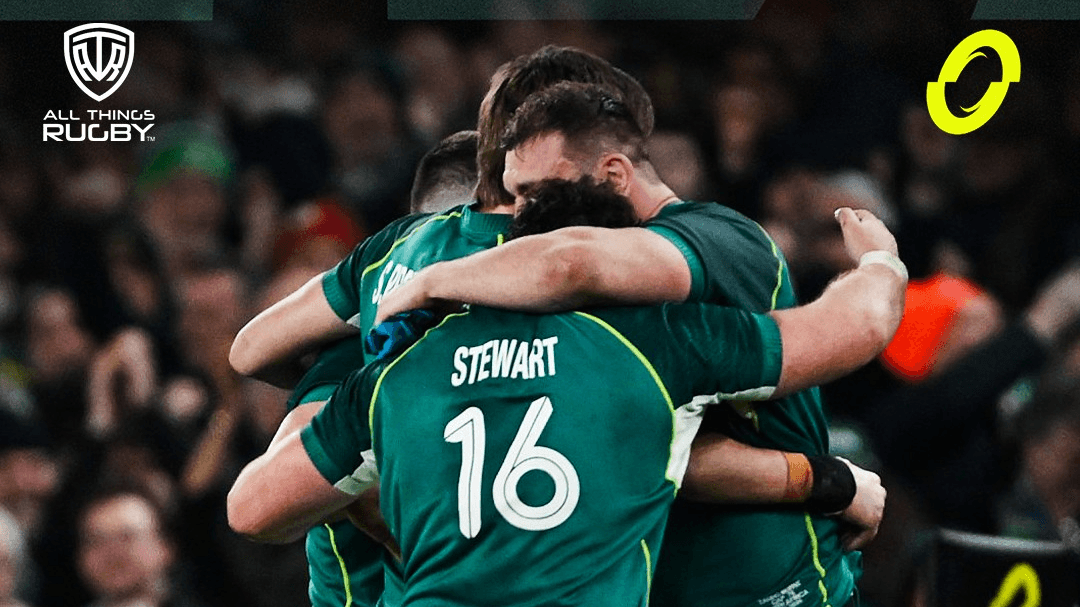
Ireland beat South Africa 20-17 in Round 6 of the Nations Championship, with Robert Baloucoune's two early tries giving them a lead the Springboks could not overturn. The visitors' losing bonus point was enough to put them into the final on points difference, but a second straight defeat leaves real questions about their attack.
Ireland did not simply hold off the world champions in Dublin. They out-thought them for long periods, and South Africa's route to the final owed more to the bonus-point arithmetic than to the way they played. For a side that had lost to France seven days earlier, the Springboks were unusually short of ideas outside the set piece, and Ireland's line speed and their willingness to kick and contest in the air made life uncomfortable for a back division that normally thrives on space.
The match turned in the first quarter. South Africa took an early lead through a Sacha Feinberg-Mngomezulu penalty after the opening scrum, but Ireland's first real attacking sequence brought a try for Baloucoune, finished from a lob by Stuart McCloskey, and the second followed soon after when Mack Hansen released him into the corner. Two tries from the right wing in eighteen minutes were less a reward for individual brilliance than for the way Ireland found width and numbers quickly, and for South Africa's defenders being a step slow to read the shape. Baloucoune was the match-winner with two tries.
How the margin was built and almost lost
South Africa's reply came, predictably, through the forwards. Morne van den Berg scored from a five-metre scrum after the Springboks opted for the pushover, and they had the better of the scrum count in the match, winning eight from nine against Ireland's five from six. Ireland had the answer to that at the other end, running the short side from a lineout so that Ronan Kelleher could cross just before the interval, and Sam Prendergast's conversion made it 17-10 at the break. Kelleher was busy throughout, winning all seven of his lineout throws and making useful ground with ball in hand.
A try for Canan Moodie just after the restart was ruled out because his foot was in touch, and that decision shaped the second half. Prendergast then kicked a penalty on 53 minutes to make it 20-10, which also took away South Africa's chance of a losing bonus point, and it was Malcolm Marx's try four minutes later that restored it. Marx's score, his 33rd Test try, brought the Springboks the bonus point, and Feinberg-Mngomezulu's conversion left three points between the sides with more than twenty minutes to play.
The closing stages were tense but Ireland's discipline held. Dan Sheehan was shown a yellow card and Marco van Staden a red at the same ruck on 72 minutes, leaving both sides a player short, and South Africa built a long sequence of phases in their final attack. It ended when the ball was lost close to the Irish posts as the Springboks bunched up, which summed up how little cutting edge they had behind the scrum. Ireland were not flawless: Hugo Keenan and several forwards gave the ball away too often, and fourteen turnovers conceded is a figure Farrell will want reduced. But their defence, led by Ryan Baird's eighteen tackles and Joe McCarthy's thirteen, never lost its shape.
What it means
Among the individuals, Baloucoune deserves the headlines, but Prendergast's goalkicking, with a penalty and two conversions, was just as important. McCloskey's lob for the first try showed the kind of vision that a lot of centres of his size do not get credit for. For South Africa, Feinberg-Mngomezulu was the most productive back with the ball, and Moodie's impact off the bench was lively, even if he ended up on the wrong side of the touchline.
South Africa will take comfort in what the result did for them. The bonus point tied them with New Zealand on points in the southern table, and their far superior points difference sends them to the final against France at Twickenham on Sunday 29 November. Their set piece remains formidable, with fifteen lineouts won from seventeen, but they lost the aerial contest, their backline struggled to make anything of the width on offer and a second successive defeat, their first back-to-back losses in four years, is an unusual blemish. They will need a sharper attacking plan against France than they showed here.
For Ireland, the win secured third place in the North on 24 points and a meeting with Australia on Friday 27 November. It will be remembered as a match in which they used the ball better than South Africa did, and that is a sound basis for what follows.
Match stats
Match Stats
CARRIES
CLEAN BREAK
DEFENDER BEATEN
TACKLE
MISSED TACKLE
TURNOVER WON
TURNOVERS CONCEDED
PENALTY CONCEDED
YELLOW CARD
RED CARD
POSSESSION
SCRUMS
LINEOUTS
Updated standings
| # | Team | PL | W | L | D | PD | BP | PTS | Form |
|---|---|---|---|---|---|---|---|---|---|
| 1 |  England | 6 | 5 | 1 | 0 | 159 | 5 | 25 | W W W W W |
| 2 |  Ireland | 6 | 5 | 1 | 0 | 60 | 4 | 24 | W W W L W |
| 3 |  France | 5 | 4 | 1 | 0 | 80 | 5 | 21 | W W W W L |
| 4 |  Scotland | 6 | 4 | 2 | 0 | 54 | 4 | 20 | W W L W L |
| 5 |  Wales | 5 | 3 | 2 | 0 | -28 | 3 | 15 | W W L L W |
| 6 |  Italy | 6 | 0 | 6 | 0 | -163 | 2 | 02 | L L L L L |
| # | Team | PL | W | L | D | PD | BP | PTS | Form |
|---|---|---|---|---|---|---|---|---|---|
| 1 |  South Africa | 6 | 4 | 2 | 0 | 135 | 6 | 22 | L L W W W |
| 2 |  New Zealand | 6 | 4 | 2 | 0 | 41 | 6 | 22 | L L W W W |
| 3 |  Argentina | 5 | 2 | 3 | 0 | -27 | 3 | 11 | W L L W L |
| 4 |  Australia | 5 | 1 | 4 | 0 | 3 | 5 | 09 | L L W L L |
| 5 |  Japan | 6 | 1 | 5 | 0 | -158 | 1 | 05 | L L L L L |
| 6 |  Fiji | 6 | 1 | 5 | 0 | -156 | 0 | 04 | W L L L L |