

Six matches, three days and the first Nations Championship title: the inaugural Finals Weekend brings all 12 teams to Allianz Stadium, Twickenham, from 27 to 29 November. France and South Africa headline Sunday's Grand Final, England and New Zealand meet again after last weekend's emphatic English win, and every other side has one final opportunity to shape its campaign.
The pairings come from the two hemisphere tables after six rounds across July and November: first plays first, second plays second, and so on. France, England and Ireland finished only two points apart at the top of the northern group, while South Africa and New Zealand both finished on 22 points in the south. All six fixtures are rematches from earlier in the competition, giving each coaching team a direct reference point.
More than the Grand Final
All six games also contribute to the Hemisphere Shield. Each of the five ranking matches is worth one point and the Grand Final is worth two; four points wins the Shield. That gives Friday's opener a stake in the wider weekend as well as the placing match itself. Official format and tie-break guide.
Kickoff guide: Written kickoff times are GMT, the local time in London; the match banners display times in your local timezone. Every fixture is at Allianz Stadium, Twickenham.
Fiji v Italy: one last chance to change the story
Friday 27 November, 16:40 GMT | Eleventh-place play-off




Fiji


Italy
Six days after Fiji won 21-16 in Udine, these teams meet again with Italy still looking for their first victory of the competition. Fiji finally have a result to build on; Italy have the frustration of knowing that a 10-0 lead and a 13-7 half-time advantage were not enough last weekend. Both teams have a clear practical lesson to carry into the rematch.
Italy's priority is to turn their early territory into a lead that survives the next change in momentum. They created opportunities in Udine but left points behind. Fiji's comeback, including two tries from Tevita Ikanivere, showed that their close-range carrying can be just as damaging as their broken-field running. Italy must defend those repeated efforts without conceding the penalties that restart the pressure.
Confirmed team news
Paolo Garbisi returns at fly-half in an Italy side showing five changes, with Niccolò Cannone captaining and Enoch Opoku Gyamfi making his first Test start. Fiji have reshaped their front row, half-backs and midfield, with Isoa Nasilasila as captain and Terio Tamani partnering Caleb Muntz. Tevita Ikanivere and Frank Lomani are among Fiji’s replacements. Italy team announcement; Fiji matchday squad.
Fiji starting XV
1. Vilikesa Nairau; 2. Peniami Narisia; 3. Inoke Ravuiwasa; 4. Setareki Turagacoke; 5. Isoa Nasilasila (captain); 6. Mesake Vocevoce; 7. Elia Canakaivata; 8. Kitione Salawa; 9. Terio Tamani; 10. Caleb Muntz; 11. Peniasi Dakuwaqa; 12. Vinaya Habosi; 13. Iosefo Masi; 14. Jiuta Wainiqolo; 15. Ponipate Loganimasi.
Replacements: 16. Tevita Ikanivere; 17. Peni Ravai; 18. Luke Tagi; 19. Joseva Tamani; 20. Etonia Waqa; 21. Frank Lomani; 22. Isikeli Rabitu; 23. Sireli Maqala.
Italy starting XV
1. Danilo Fischetti; 2. Tommaso Di Bartolomeo; 3. Marco Riccioni; 4. Niccolò Cannone (captain); 5. Federico Ruzza; 6. Ross Vintcent; 7. Manuel Zuliani; 8. Enoch Opoku Gyamfi; 9. Stephen Varney; 10. Paolo Garbisi; 11. Monty Ioane; 12. Leonardo Marin; 13. Federico Mori; 14. Ange Capuozzo; 15. Tommaso Allan.
Replacements: 16. Giacomo Nicotera; 17. Ivan Nemer; 18. Ion Neculai; 19. Andrea Zambonin; 20. Lorenzo Cannone; 21. Alessandro Ortombina; 22. Alessandro Fusco; 23. Paolo Odogwu.
What decides it: Italy need secure exits and patient finishing; Fiji need to keep their handling controlled and make the Azzurri defend consecutive phases. The first loose kick or rushed offload could turn a tight match.
ATR prediction: Fiji by 4. Garbisi’s return and Fiji’s changed combinations make the call less comfortable, but Fiji’s attacking threat and experienced replacements still give them a narrow edge in another likely one-score contest. Previous meeting: FIR match report.
Ireland v Australia: discipline against the Irish squeeze
Friday 27 November, 20:10 GMT | Fifth-place play-off


Ireland


Australia
Ireland's 20-17 win over South Africa and Australia's 29-26 victory in Wales give Friday's second match two teams with something positive to carry into London. They also reveal the different challenges ahead. Ireland need to reproduce their control against another powerful pack; Australia need to make their improved attack count without giving territory straight back through penalties.
Les Kiss, a former Ireland assistant, knows the problem well. His Wallabies conceded 14 penalties in Cardiff, enough to keep Wales within reach even when Australia were creating the better opportunities. Against Ireland, that pattern risks becoming a succession of attacking lineouts and long defensive sets. Ireland won the July meeting in Sydney 33-31, so the Wallabies have evidence that they can make this competitive.
Confirmed team news
Nick Timoney replaces suspended Dan Sheehan at number eight, Jacob Stockdale comes in for Mack Hansen and Tadhg Beirne captains Ireland. James McNabney and Nathan Doak join the bench. Kelleher remains at hooker. Ireland’s announced team.
Allan Alaalatoa starts and co-captains Australia on his 100th Test appearance. James Ramm makes his debut on the left wing and Kalani Thomas makes his first Test start at scrum-half. Australia have selected a six–two bench, including co-captain Harry Wilson, uncapped Teddy Wilson and the returning Kurtley Beale. Official Wallabies team announcement.
Ireland starting XV
1. Andrew Porter; 2. Rónan Kelleher; 3. Tadhg Furlong; 4. Joe McCarthy; 5. Tadhg Beirne (captain); 6. Ryan Baird; 7. Josh van der Flier; 8. Nick Timoney; 9. Jamison Gibson-Park; 10. Sam Prendergast; 11. Jacob Stockdale; 12. Stuart McCloskey; 13. Robbie Henshaw; 14. Robert Baloucoune; 15. Hugo Keenan.
Replacements: 16. Tom Stewart; 17. Tom O'Toole; 18. Thomas Clarkson; 19. James Ryan; 20. James McNabney; 21. Nathan Doak; 22. Ciarán Frawley; 23. Bundee Aki.
Australia starting XV
1. Isaac Kailea; 2. Brandon Paenga-Amosa; 3. Allan Alaalatoa (co-captain); 4. Josh Canham; 5. Jeremy Williams; 6. Tom Hooper; 7. Carlo Tizzano; 8. Rob Valetini; 9. Kalani Thomas; 10. Carter Gordon; 11. James Ramm; 12. Len Ikitau; 13. Joseph-Aukuso Suaalii; 14. Max Jorgensen; 15. Tom Wright.
Replacements: 16. Josh Nasser; 17. Angus Bell; 18. Taniela Tupou; 19. Lachlan Shaw; 20. Harry Wilson (co-captain); 21. Fraser McReight; 22. Teddy Wilson; 23. Kurtley Beale.
What decides it: Australia’s discipline, the quality of their exits and the impact of their six-forward bench. Ireland need to keep control of territory when the Wallabies introduce fresh carrying power in the final quarter.
ATR prediction: Ireland by 8. Ireland’s established half-back and midfield combinations give them the edge. Australia’s bench should keep this competitive, but their changed starting combinations face a demanding test of organisation and discipline.
Wales v Japan: make the good passages count
Saturday 28 November, 13:10 GMT | Ninth-place play-off


Wales


Japan
Wales beat Japan 28-21 in Cardiff earlier this month, then produced the 35-28 victory over New Zealand that transformed the mood around their campaign. Last weekend's 29-26 defeat by Australia is a useful check on that optimism: Wales have shown they can win a major Test, but turning good passages into a complete performance remains the next step.
Japan arrive after conceding 78 against England and 67 against Scotland. The closer Cardiff contest offers a more encouraging reference point, but they cannot depend on Welsh missed chances to stay in the game. Their first task is to keep the defensive line connected and reduce the number of consecutive phases they have to absorb near their own posts.
For Wales, the temptation will be to attack every opportunity after seeing those recent Japanese scorelines. A more reliable route is to win territory, build pressure and use width when the forwards have earned it. Japan's best opening is an untidy game in which quick restarts and counter-attacks prevent Wales from settling.
What decides it: Welsh accuracy in the opposition 22 and Japan's ability to escape pressure without giving the ball straight back.
ATR prediction: Wales by 10. Wales have the stronger recent results and already know how difficult Japan can be when allowed to remain within one score. Official competition results.
England v New Zealand: the immediate rematch
Saturday 28 November, 16:40 GMT | Third-place play-off


England


New Zealand
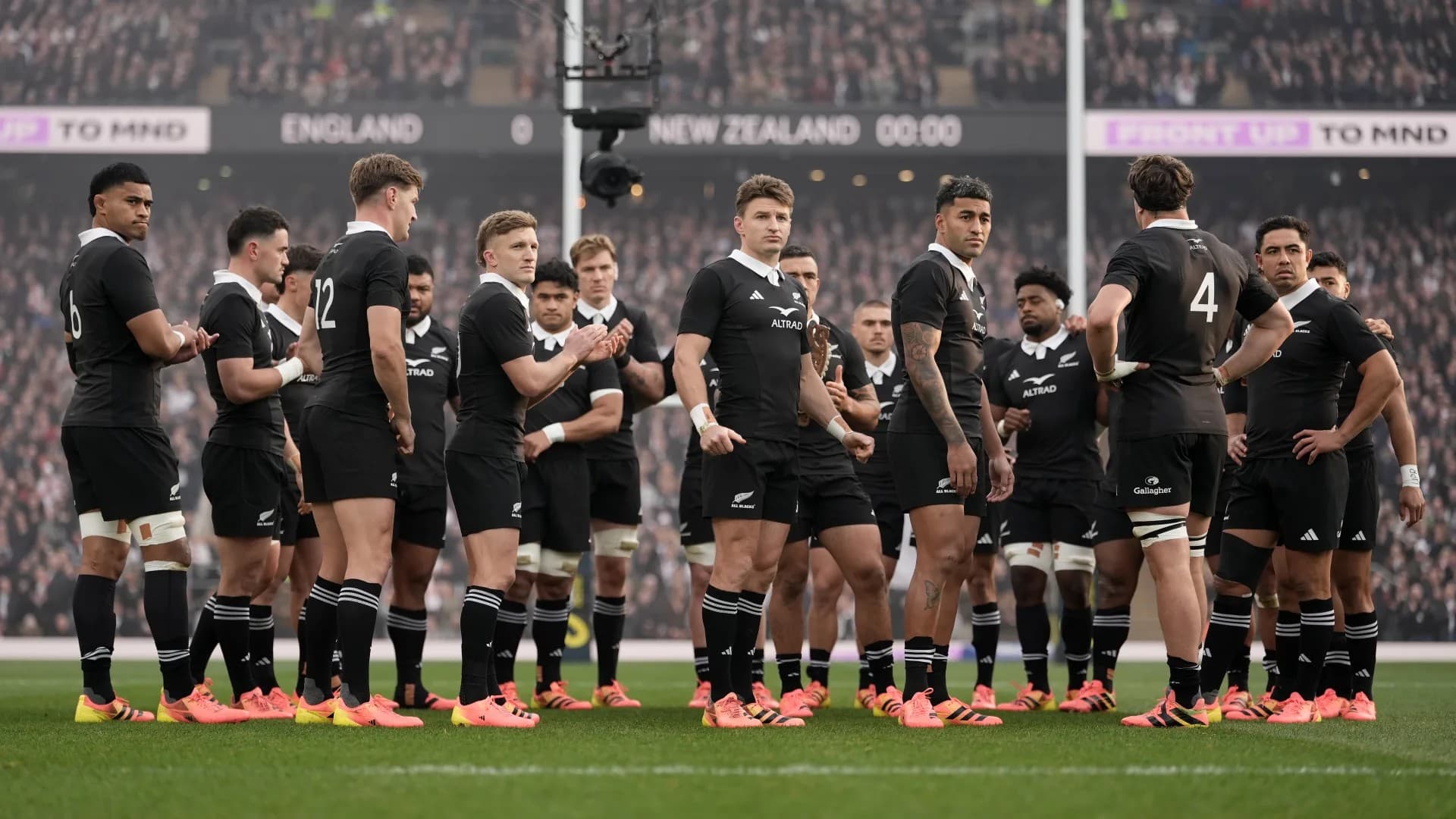
England's 37-12 win last Saturday is the defining piece of evidence, but expecting an identical game would be a mistake. The All Blacks have had a week to work on the exchanges that went against them; England must prove they can impose the same pressure when their opponent knows exactly what is coming.
The basic contest is whether England can keep New Zealand's attack operating from slow or untidy possession. Clean set-piece ball, connected defence and accurate exits are the visitors' route back into the match. England should be wary of chasing another big winning margin: protecting possession and making New Zealand build their scores is the more convincing way to reproduce the result.
New Zealand Rugby has confirmed that Will Jordan is out with a recurring hamstring strain. Samisoni Taukei'aho has joined as cover while Codie Taylor's availability is assessed. Jordan's absence removes a major finishing threat, while uncertainty at hooker makes the set-piece response more difficult. His availability remains unresolved.
What decides it: New Zealand's first-half set piece and England's discipline when the game opens up. A cleaner All Blacks platform would narrow the gap quickly; repeated errors would let England apply the same pressure again.
ATR prediction: England by 8. Expect a stronger New Zealand response, but England have the clearer recent performance and fewer questions to answer. Official All Blacks injury update.
Scotland v Argentina: attack with a safety net
Sunday 29 November, 13:10 GMT | Seventh-place play-off


Scotland


Argentina
Scotland arrive after an 11-try, 67-5 win over Japan, with Darcy Graham and Liam McConnell both scoring hat-tricks. Argentina's last outing was a 45-17 defeat in France. Those results favour Scotland, but the more relevant warning comes from July: the Scots won their first meeting 47-38 in Córdoba, a result that showed both how much they could create and how much they could concede.
Quick ball should again be Scotland's ambition, with support runners staying alive through the middle and the outside backs ready to attack a retreating defence. The restraint matters just as much. A loose pass or a poorly supported carry can give Argentina the transition opportunity that changes the rhythm of the afternoon.
The Pumas need to make Scotland work harder for their possession than Japan did. A disruptive breakdown and a reliable kicking chase would let Argentina attack from better positions and prevent this becoming another contest played largely at Scotland's preferred speed.
What decides it: The balance between Scotland's ambition and their security behind the ball. They can win an open game, but should not need to trade tries to do it.
ATR prediction: Scotland by 7. Their current attacking confidence earns the pick; the July scoreline is the reason to keep the margin modest. Scottish Rugby's finals update and Japan match report.
South Africa v France: the first title on the line
Sunday 29 November, 16:40 GMT | Grand Final


South Africa


France
France topped the northern group on 26 points and South Africa led the south on 22, ahead of New Zealand on points difference. The final therefore brings together the two hemisphere leaders, but their recent trajectories are different. France beat Argentina 45-17 to secure their place; the Springboks arrive after narrow defeats by France, 21-19, and Ireland, 20-17.
The Paris meeting is the best guide to the likely margins. France have already shown that they can find enough attacking opportunities to beat this opponent, while South Africa have remained within a single kick even on days when the result has gone against them. Neither side should expect to win simply by repeating the previous game.
France need to keep the ball moving without becoming careless when South Africa close down space. The Springboks' route is to make the set piece and close-range exchanges count, then turn field position into sustained pressure. Goal-kicking, exits and the timing of replacements all take on extra weight when the sides are so closely matched.
Thomas Ramos has returned to France's preparation squad. That expands their options for goal-kicking and tactical control, although his involvement and role remain to be confirmed.
What decides it: Whether France can earn enough clean attacking possession while denying South Africa repeated opportunities near the line. The last ten minutes could be decided by one penalty or one failed exit.
ATR prediction: France by 4. Their recent win in the fixture and stronger finish to the group stage give them a slight edge. South Africa's two narrow defeats make this the least comfortable pick of the weekend. Official results; France squad update.
ATR's weekend call
Fiji, Ireland, Wales, England, Scotland and France are our picks. That would give the north six of the seven Hemisphere Shield points and France the inaugural title. The two shortest calls are Friday's opener and Sunday's final; both could swing on a single score.